Latency when it matters.
Many processors offer an Exact mode and a lower-latency monitoring mode. The lower-latency path can change phase or timing, so the mode is a sound choice as well as a workflow choice.
CLIOS AUDIO / PRODUCT PREVIEW
Tools for shaping sound.
Space for finding your own.
23 PROCESSORS + CLIOS RACK.
Dynamics, tone, space & routing.
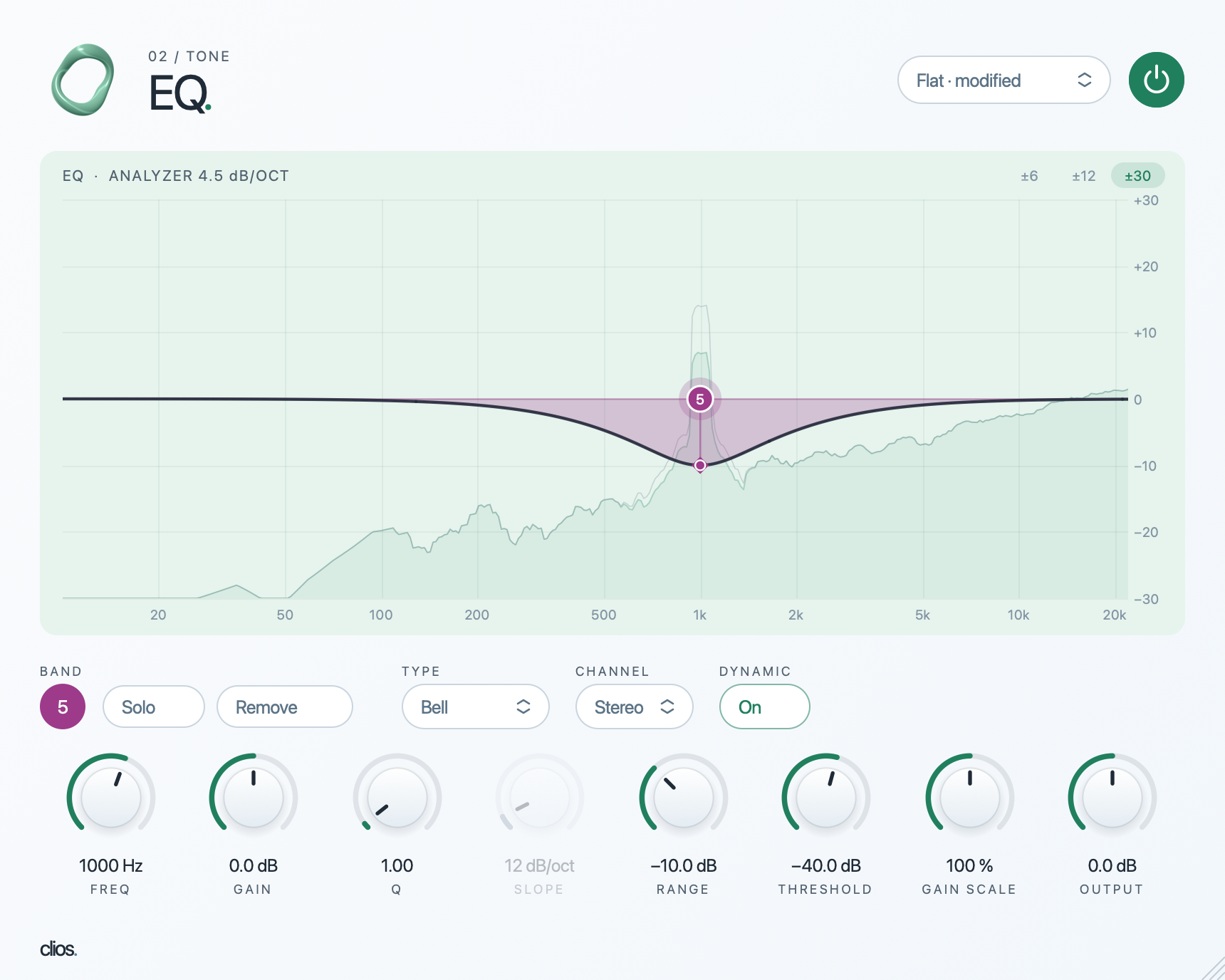
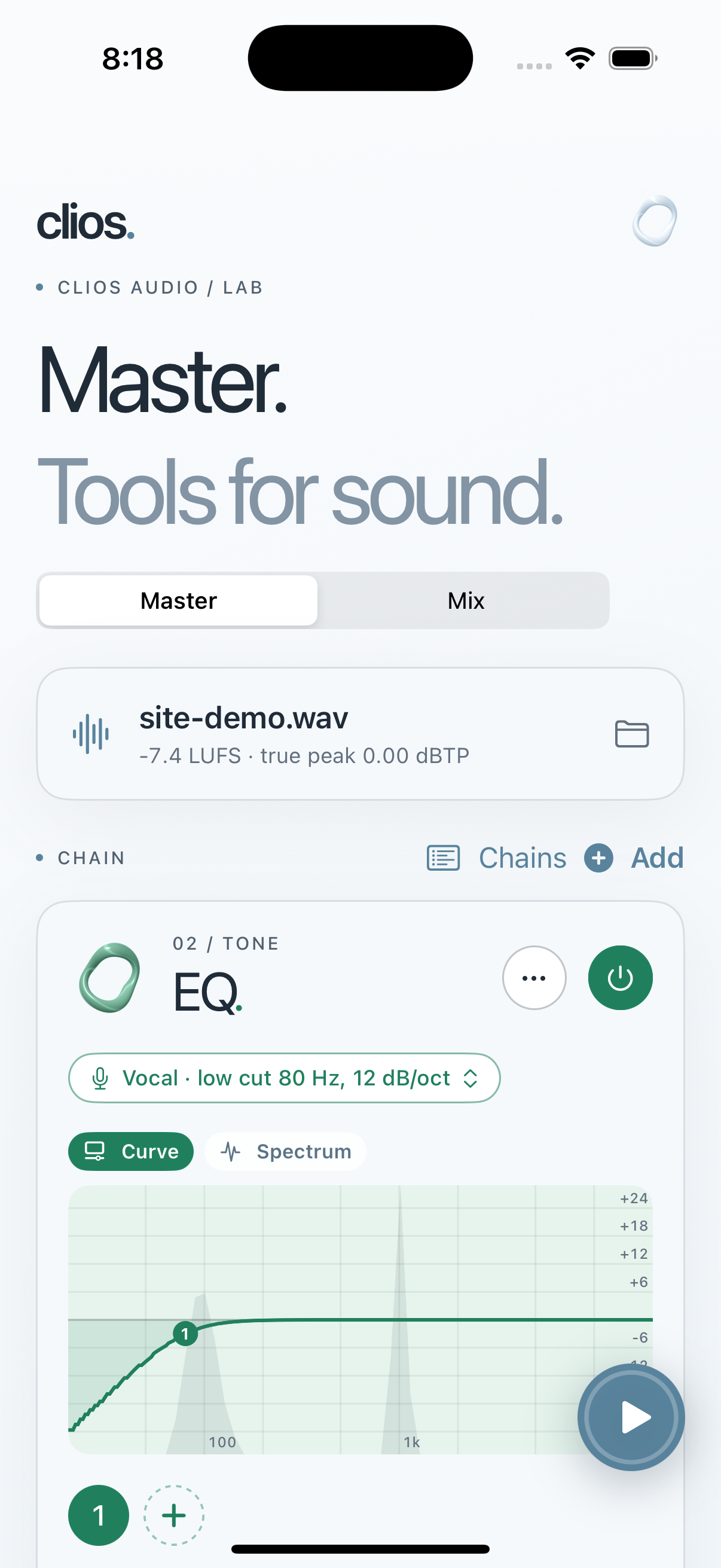
THE CURRENT EQ PLUG-IN. THE APP IN USE.

MEET MASTERING LAB
Mastering Lab brings the 23 Clios processors to iPhone and Mac. Import one mixed track for mastering, or multiple stems for mixing with a rack on each track and another on the master. Compare original and processed audio, inspect loudness and true peak, then export a WAV.
The app and plug-ins are in development. Captures come from working builds.
See the app and its workflow →Many processors offer an Exact mode and a lower-latency monitoring mode. The lower-latency path can change phase or timing, so the mode is a sound choice as well as a workflow choice.
The desktop processors and Mastering Lab share their audio engines. The app brings those tools into Master and Mix workflows with A/B listening and export.
Clios Rack hosts other AU and VST3 effects inside serial, parallel and nested split paths. Its frequency splits can favor zero added latency or linear phase.
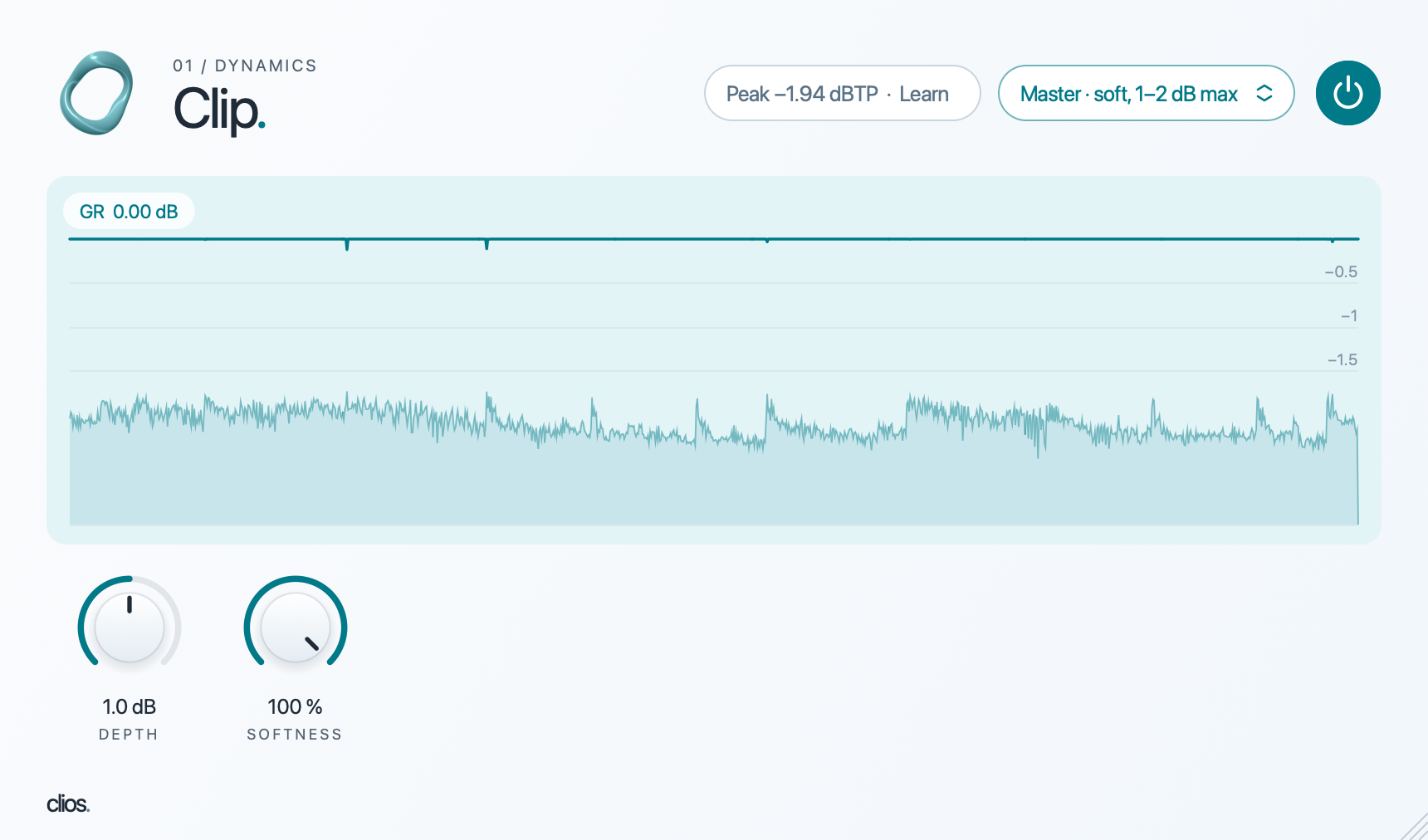
Soft peak clipper
Trims the highest transients before the mastering limiters. Depth sets how much is clipped; Softness changes the transition from clean signal to clipping.
What it adds Learn can set the clip reference from the incoming peak, so a small amount of clipping is easier to target.
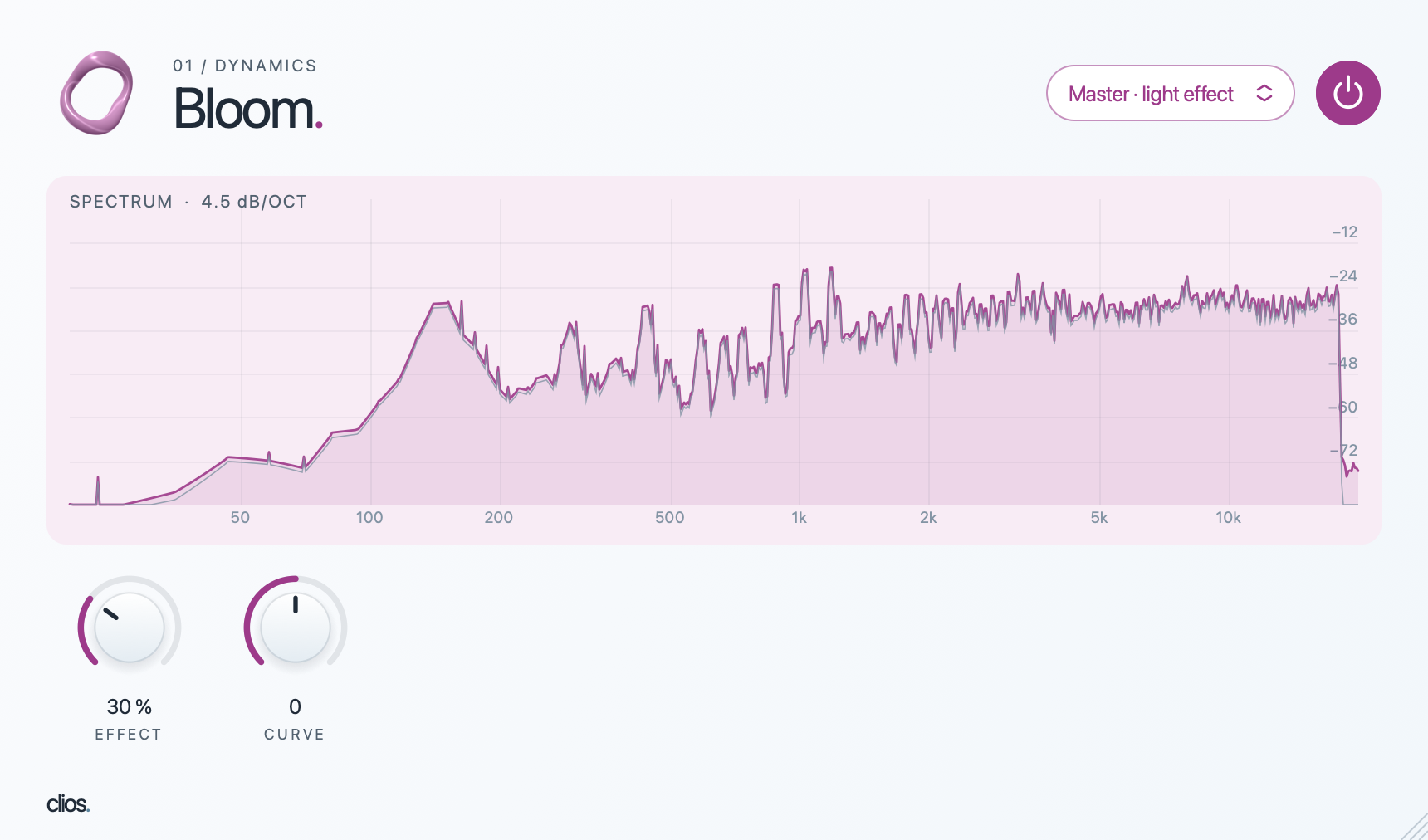
Loudness enhancer
Raises perceived density through controlled waveshaping without using a conventional compressor. Effect and Curve set the strength and shape of the change.
What it adds A subtle lift ahead of the final maximizer; waveform and harmonic views make the change visible.
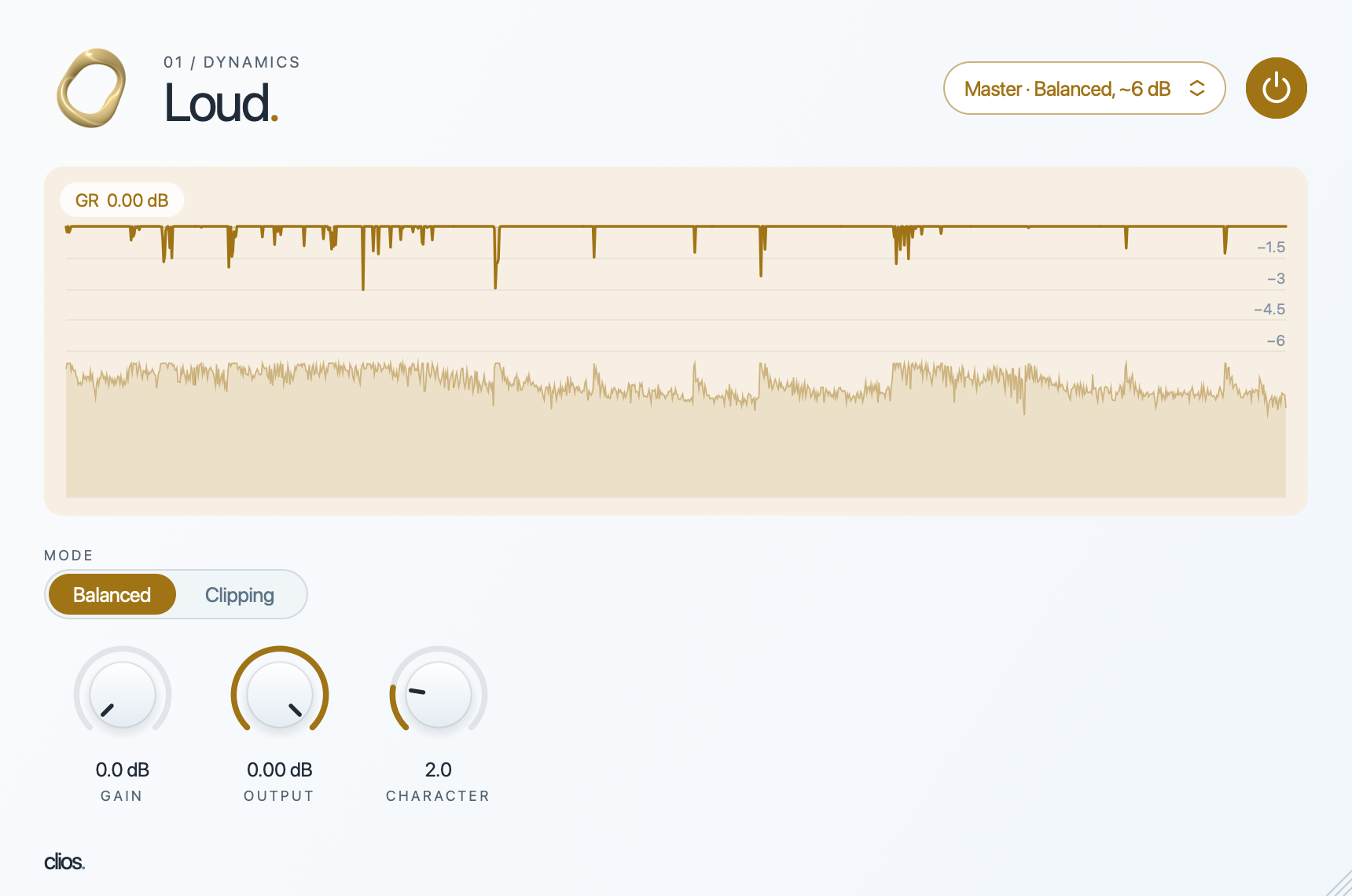
Mastering maximizer
Builds overall level with Gain, Output and Character controls. Balanced and Clipping modes offer different ways to handle peaks.
What it adds Designed as the main loudness stage before the final true-peak limiter, with reduction shown in the interface.
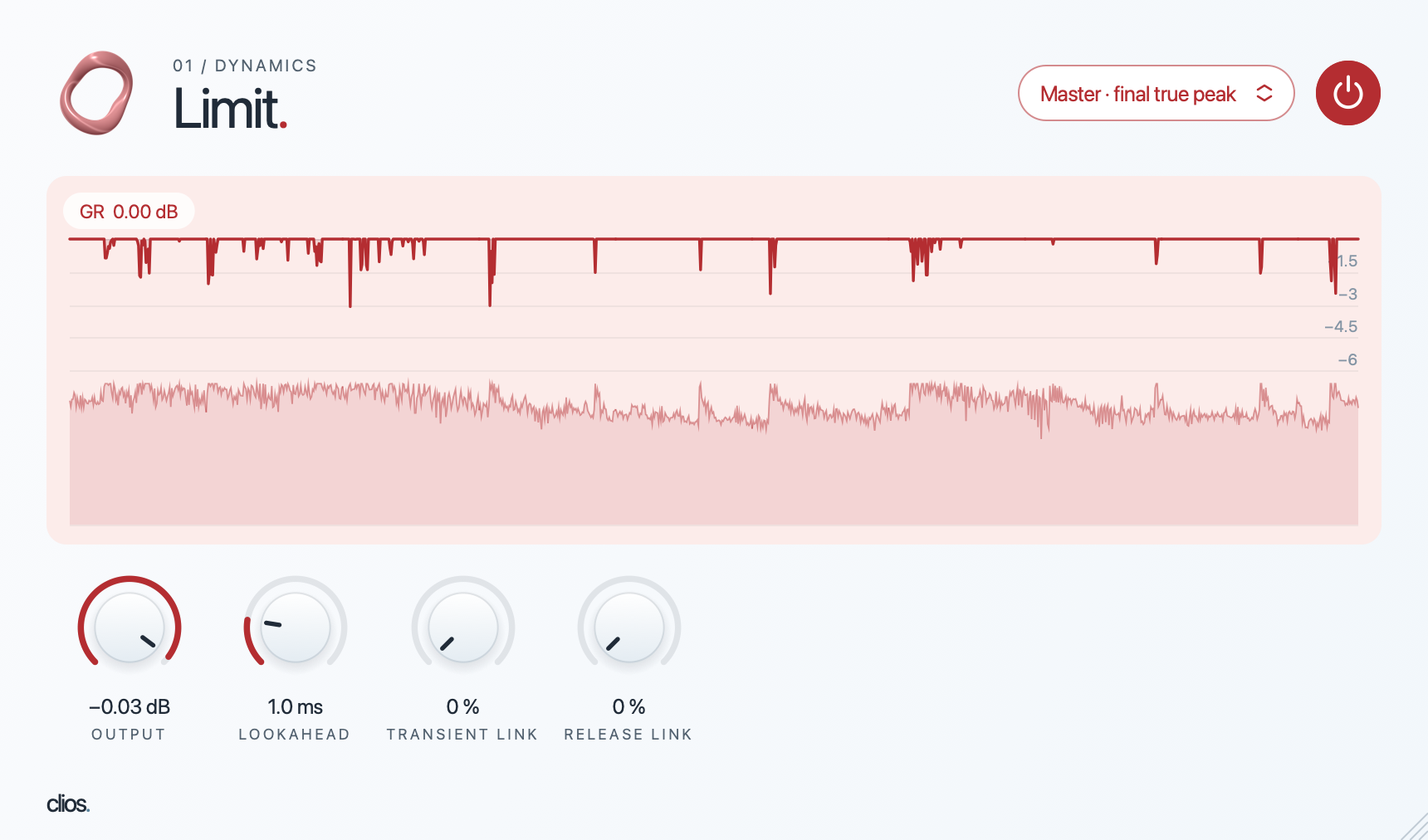
True-peak limiter
The last dynamics stage catches inter-sample peaks and sets the final output ceiling. Lookahead and transient/release linking shape its response.
What it adds Separates final peak control from the earlier maximizer, so loudness and output ceiling can be adjusted independently.
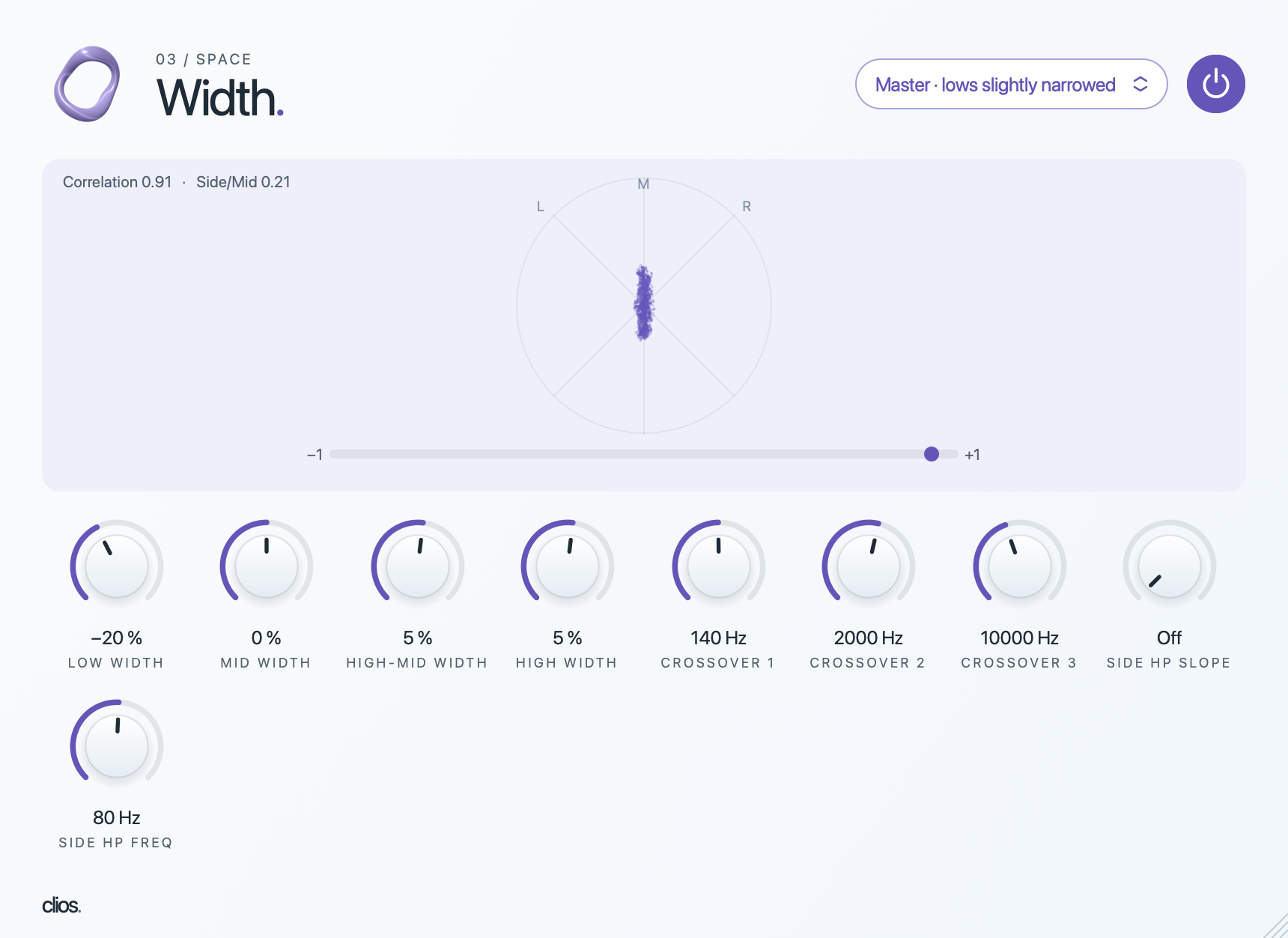
Multiband stereo width
Sets stereo width independently across four frequency regions. Three crossovers define the regions, while a Side high-pass can keep the deepest bass centered.
What it adds The width display and vectorscope help check what happens to the stereo field as each band changes.
24-band dynamic equalizer
A precision EQ with up to 24 bands, including bells, shelves, cuts and notches. Bands can target Stereo, Mid, Side, Left or Right; bell and shelf bands can also respond dynamically to level.
What it adds The current desktop editor has draggable points, band solo, a live analyzer, and visible Dynamic Range and Threshold controls. Its filter path adds no latency.
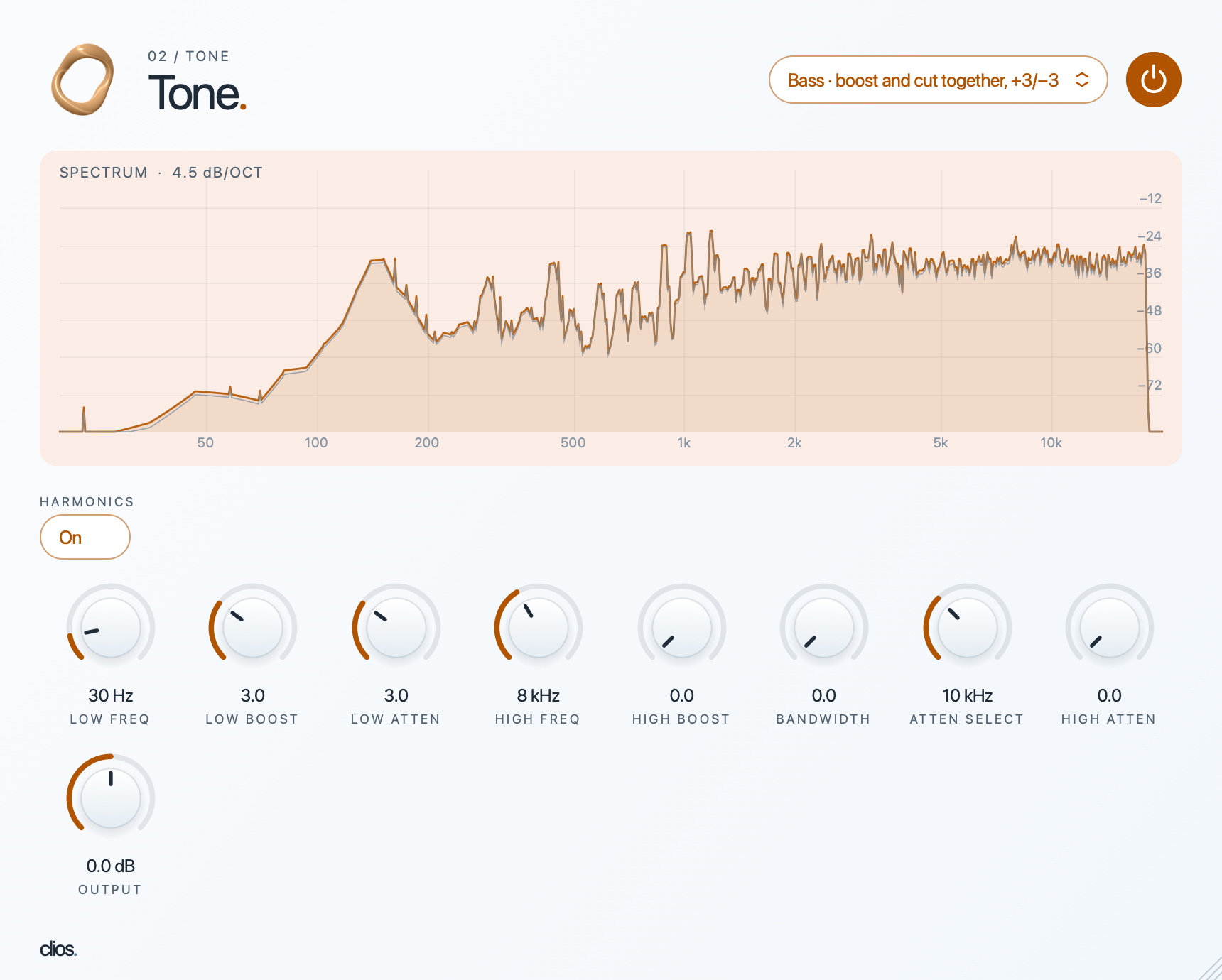
Passive tone equalizer
Shapes broad low and high frequencies, including simultaneous low boost and attenuation. Bandwidth, high attenuation and harmonics add tonal character.
What it adds Provides wider, more colored moves alongside the precise cuts and dynamic bands of Clios EQ.
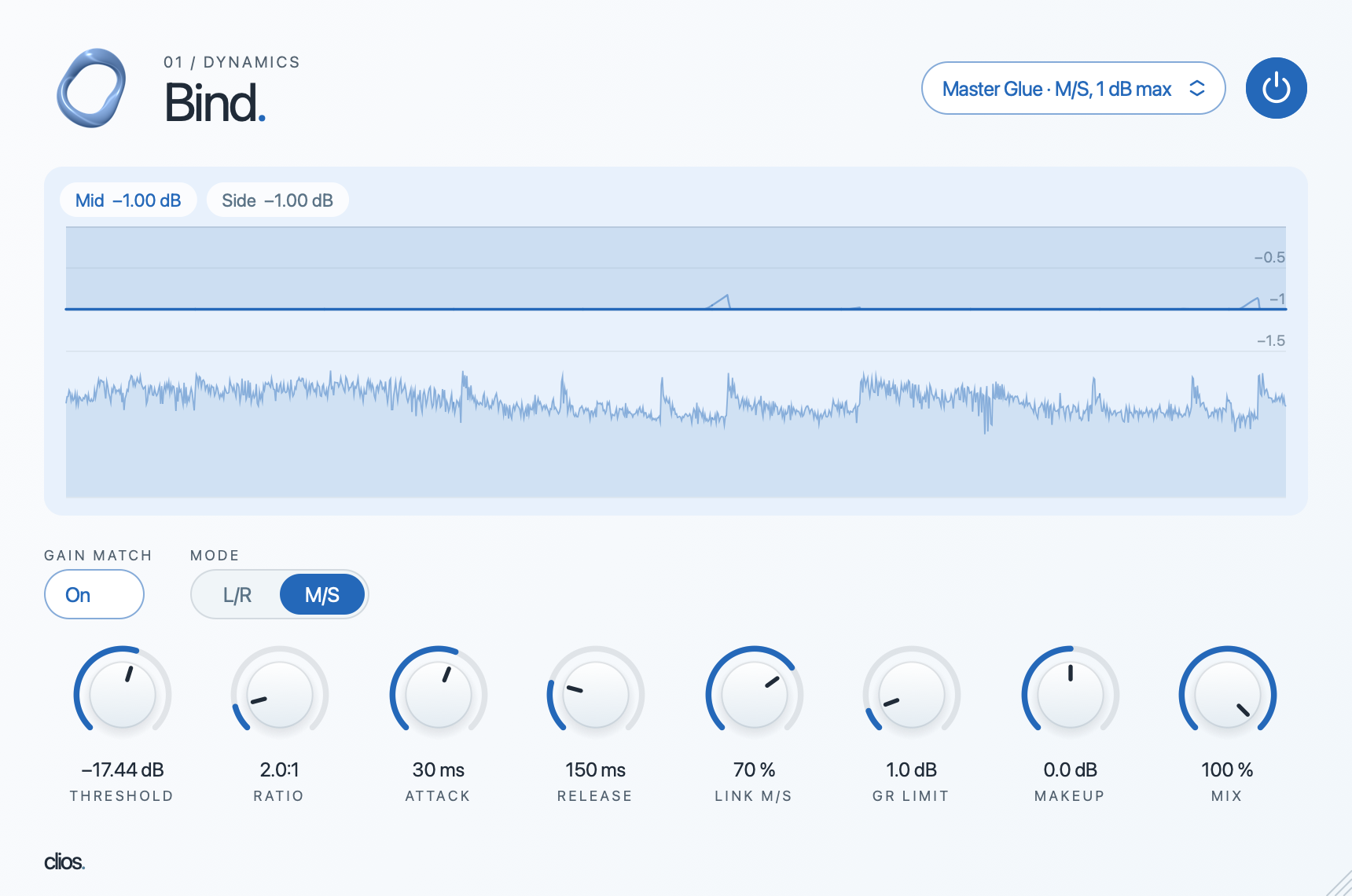
Mid/Side mastering glue compressor
A restrained compressor for joining a mix without flattening its movement. It offers L/R or Mid/Side operation, a reduction limit, link control, mix and gain matching.
What it adds The reduction limit makes small mastering moves easier to keep small, particularly when Mid and Side need different amounts of control.
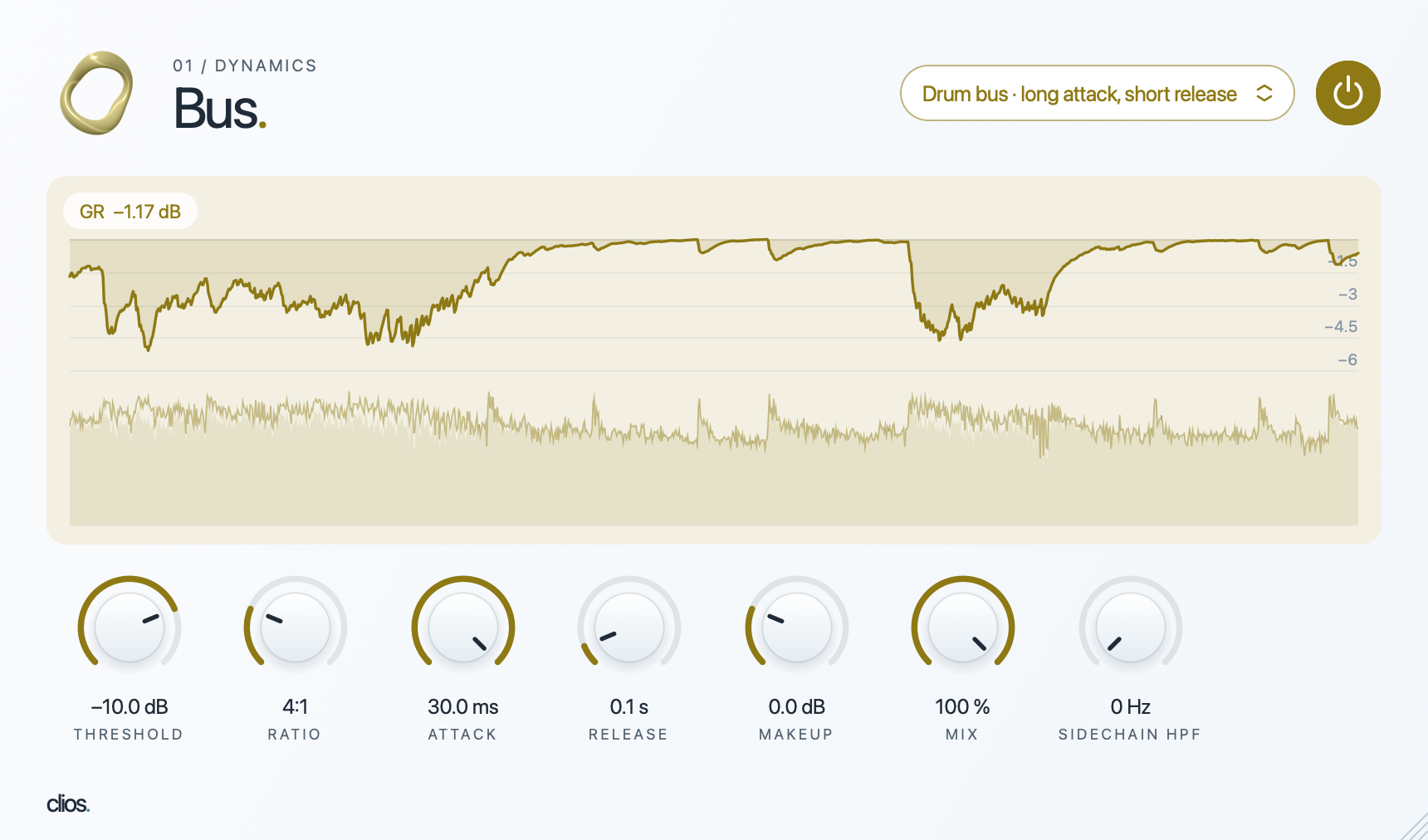
Bus compressor
Compresses a drum group or full bus with threshold, ratio, attack, release, makeup and mix. A sidechain high-pass keeps bass from driving the detector too strongly.
What it adds Longer attack and shorter release settings can retain the front of a drum hit while tightening the group.
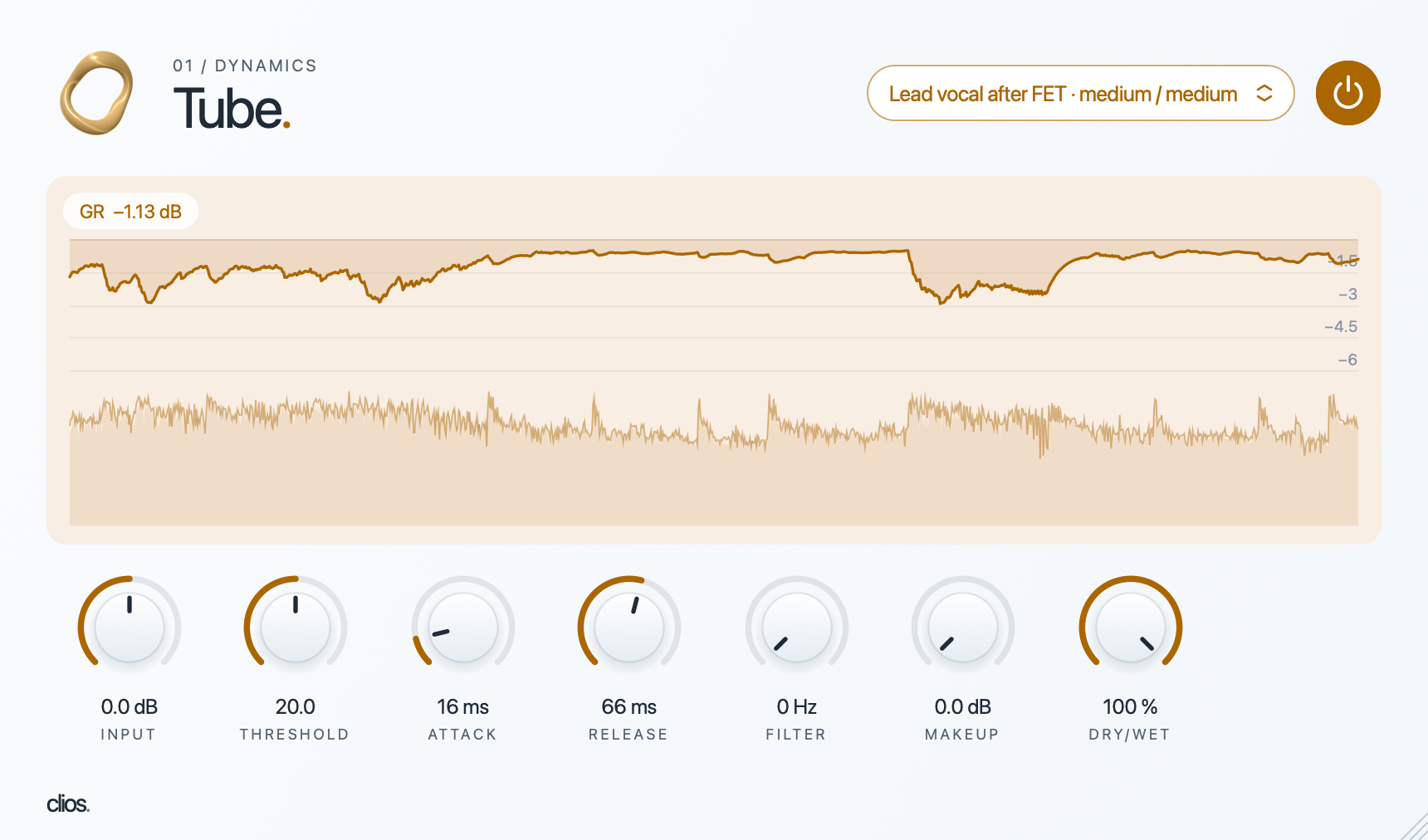
Tube compressor
Combines compression and tube character, with input, threshold, attack, release, detector filter, makeup and dry/wet controls.
What it adds A smoother second compression stage for vocals after fast peak control; the detector filter reduces the influence of low energy.
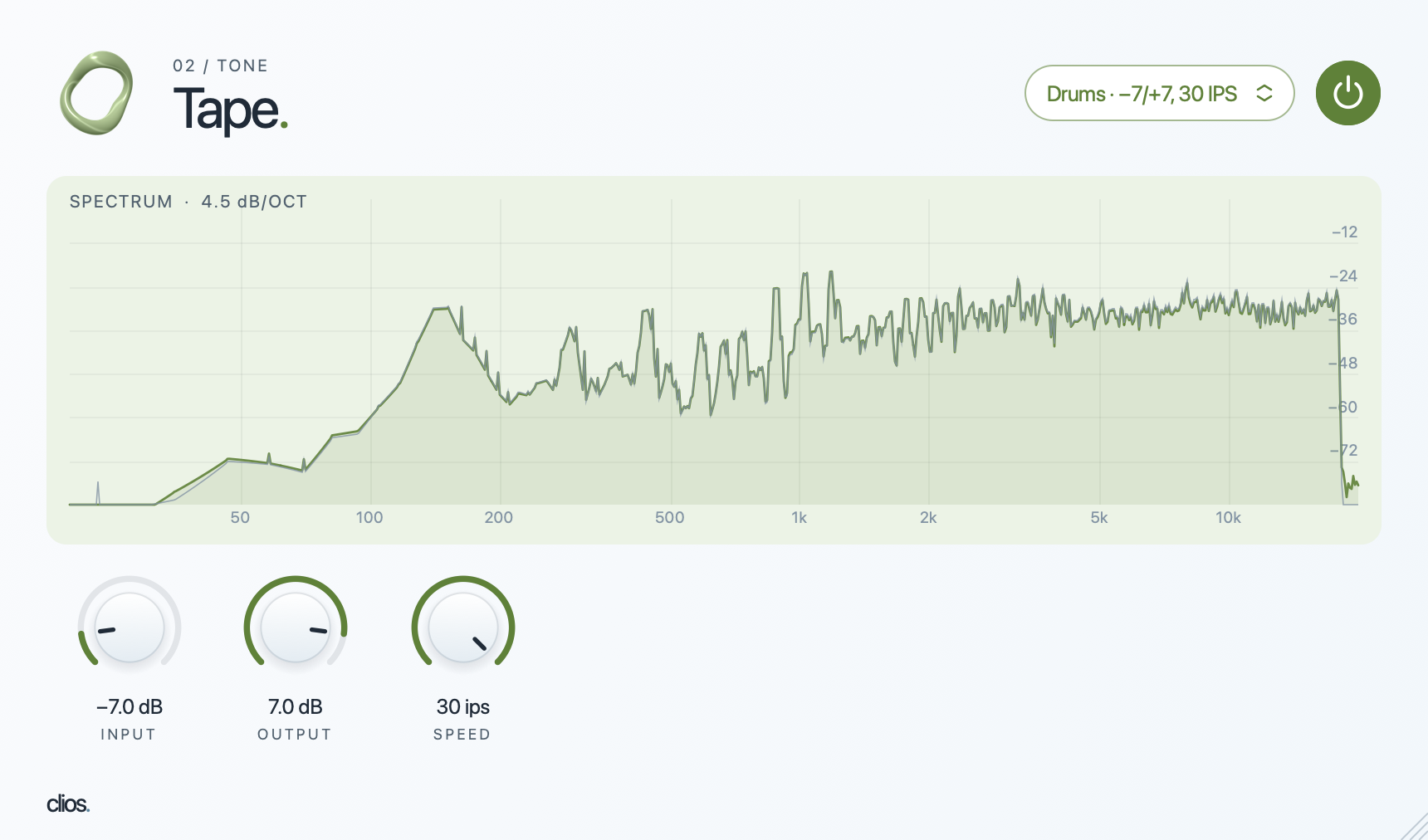
Tape machine
Adds level-dependent saturation and a low-frequency head bump. Input drives the tape behavior, Output restores level and Speed changes the tonal response.
What it adds A compact three-control way to round transients and change low-end weight. Its tape model remains under refinement.
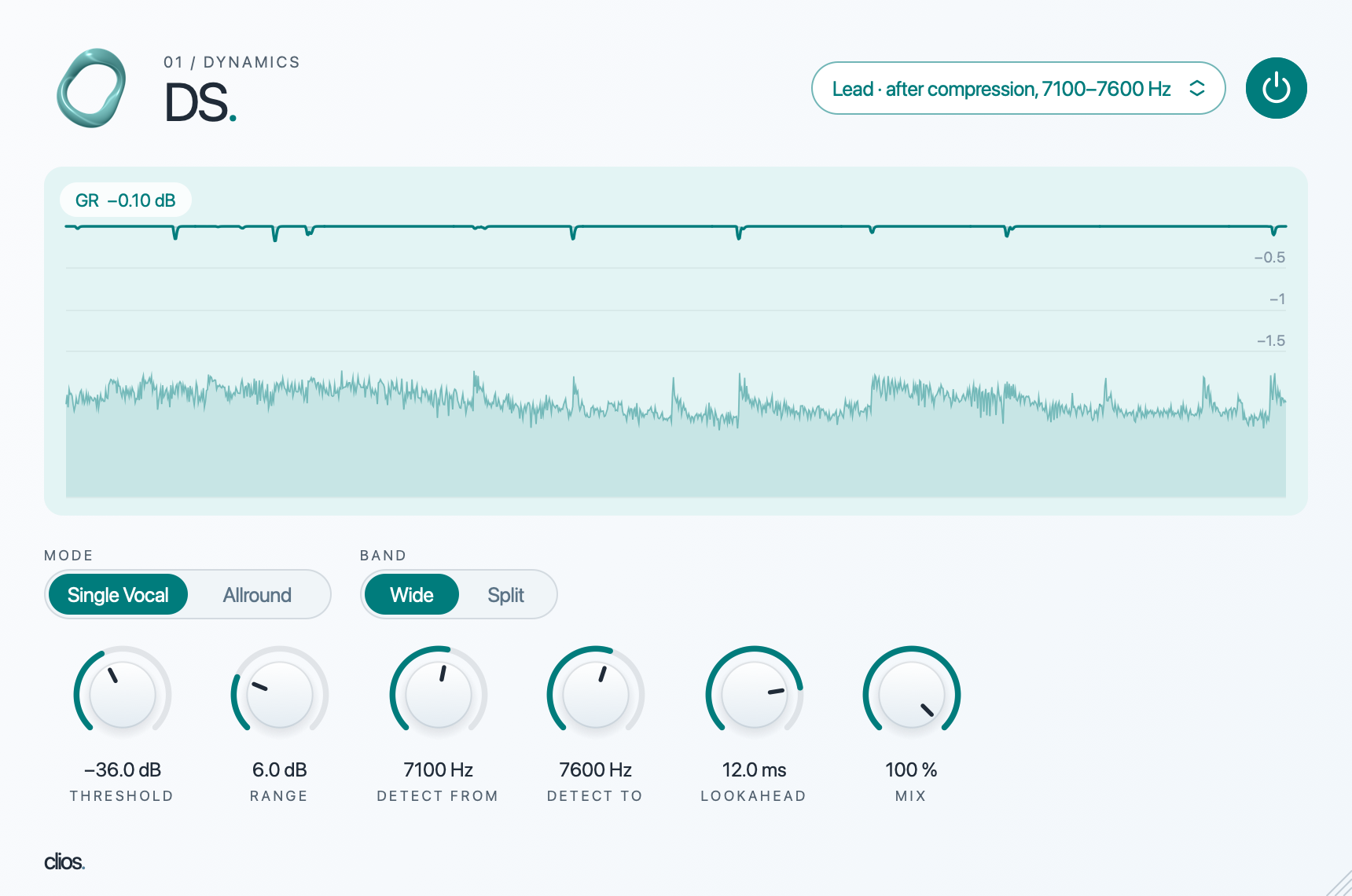
De-esser
Reduces harsh consonants only when energy rises inside the chosen detection range. Threshold, Range, Wide/Split band mode, lookahead and mix define the response.
What it adds The reduction trace and spectrum show when and where de-essing is working, helping avoid a permanently dark vocal.
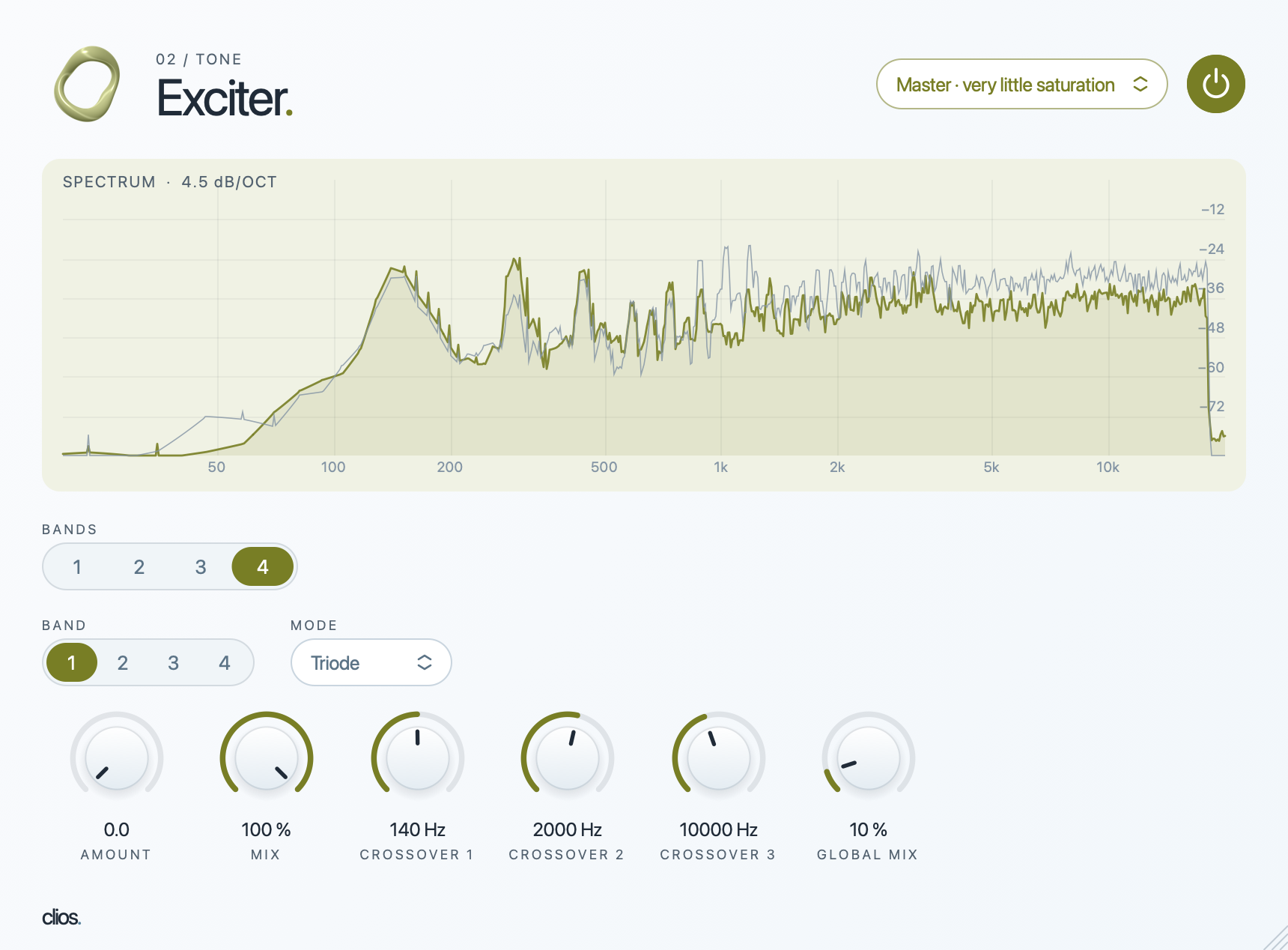
Multiband exciter
Adds harmonics independently in up to four bands. Each band has its own character, Amount and Mix, with crossovers and a global Mix for the whole effect.
What it adds Lets low and high frequencies receive different kinds and amounts of excitation instead of coloring everything equally.
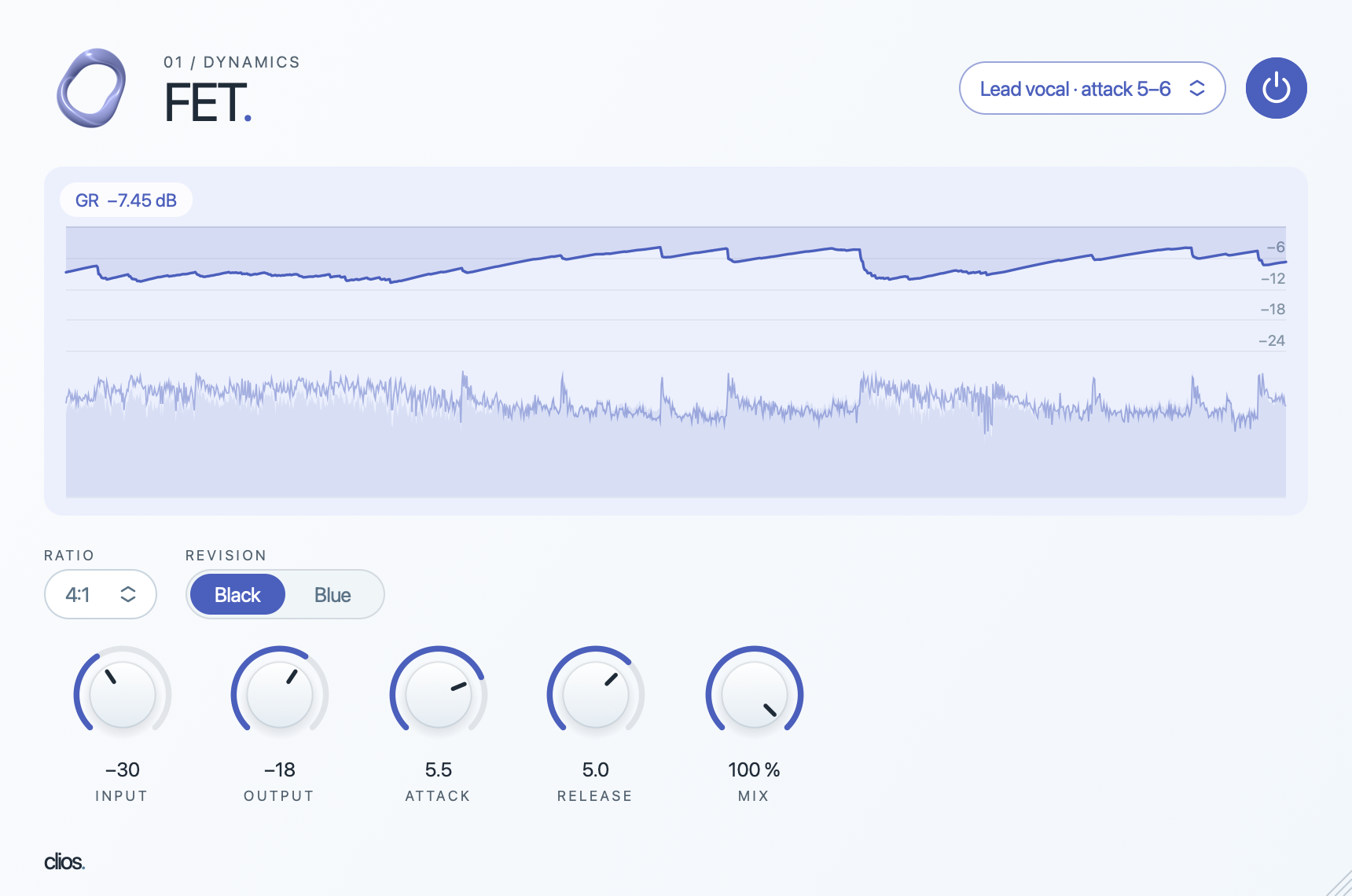
FET compressor
Catches vocal or drum peaks with fast attack and release. Ratio, circuit revision, input/output and Mix cover firm peak control through parallel compression.
What it adds Two revision choices and a reduction trace make its punchy behavior easier to shape and inspect.
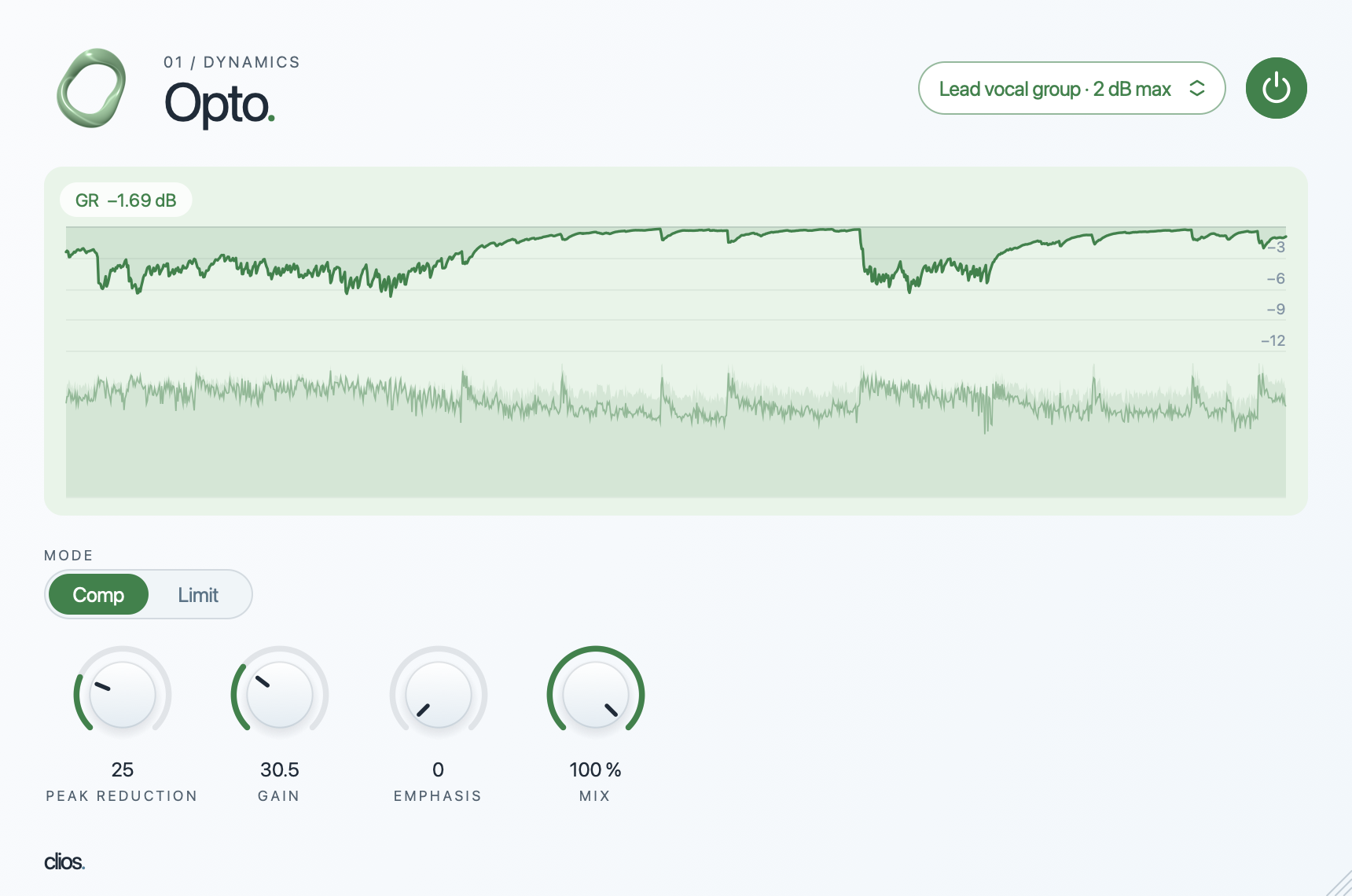
Opto compressor
Levels a vocal or group with Peak Reduction and Gain, plus Compress/Limit mode, Emphasis and Mix.
What it adds A slower, smoother dynamics option after a fast compressor when a source needs steady presence.
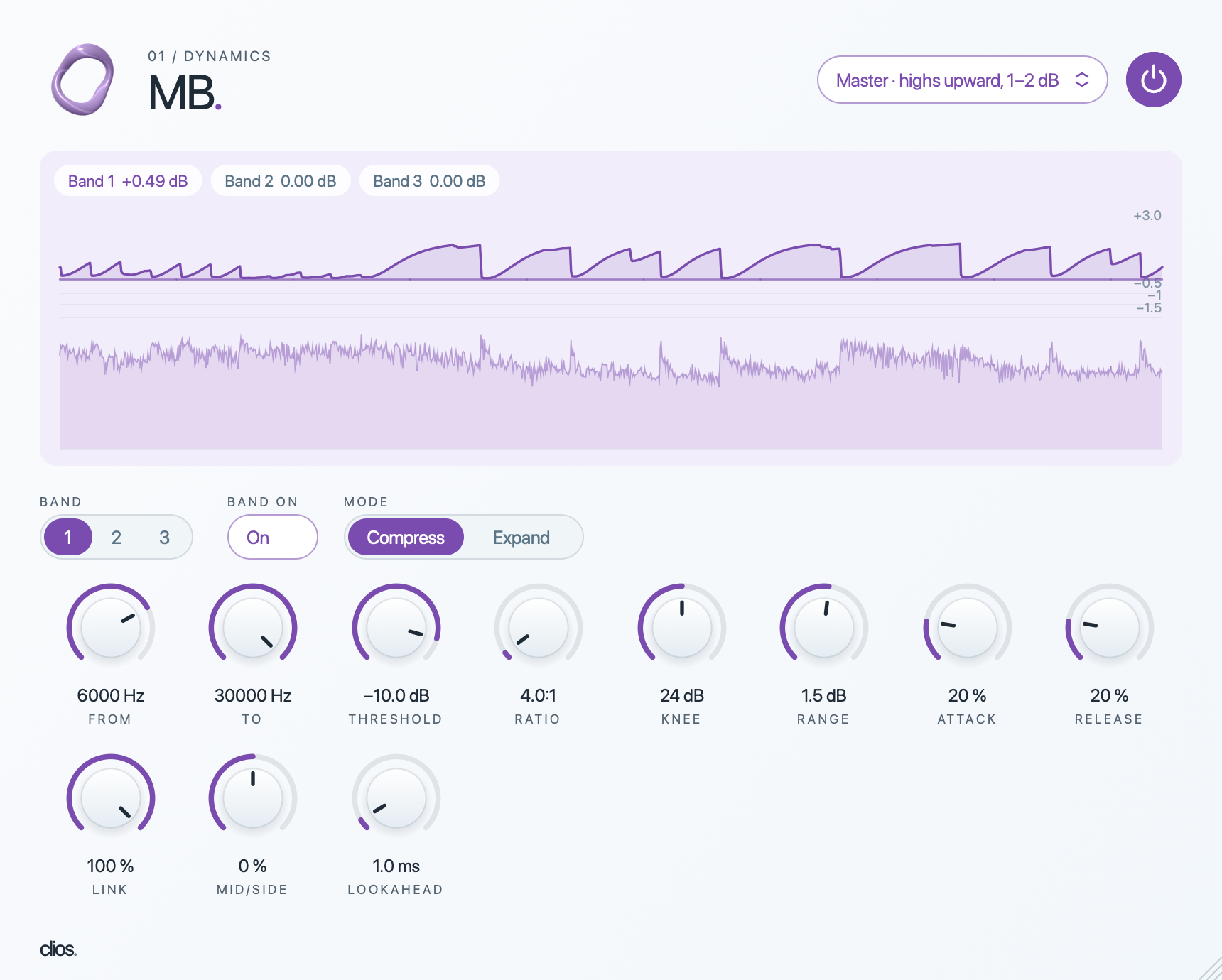
Multiband dynamics
Builds frequency-selective dynamics bands with their own range, threshold, ratio, knee and timing. Bands can compress or expand and can work in Mid/Side.
What it adds Can tame one frequency region or bring up another without making the whole mix follow one detector.
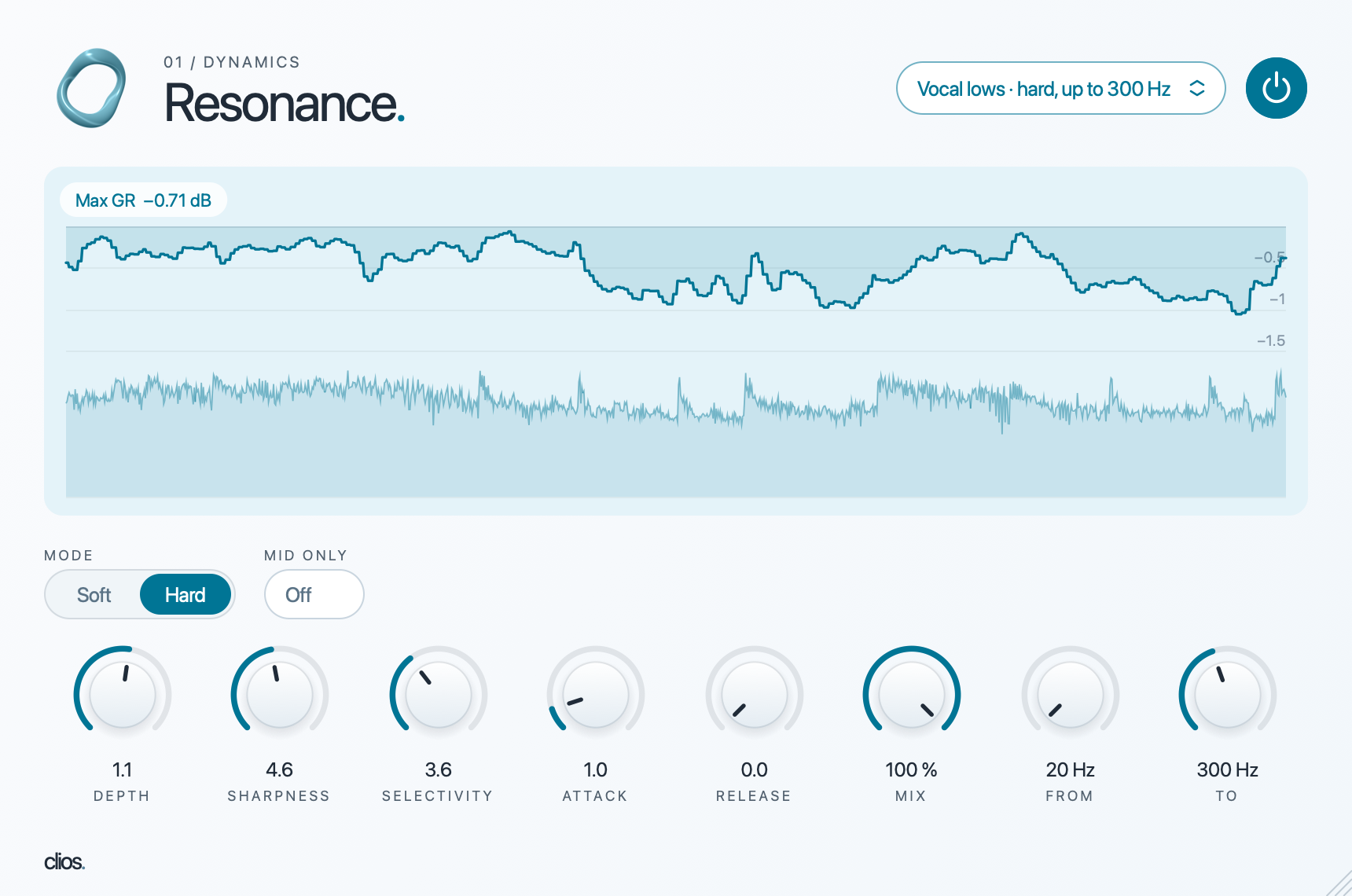
Resonance suppressor
Finds narrow resonances and reduces them when they appear, rather than leaving a permanent EQ cut. Depth, Sharpness, Selectivity, timing and frequency limits control the search.
What it adds Soft and Hard modes plus Mid-only focus the treatment; the display shows where reduction occurs. Its algorithm is still being tuned.
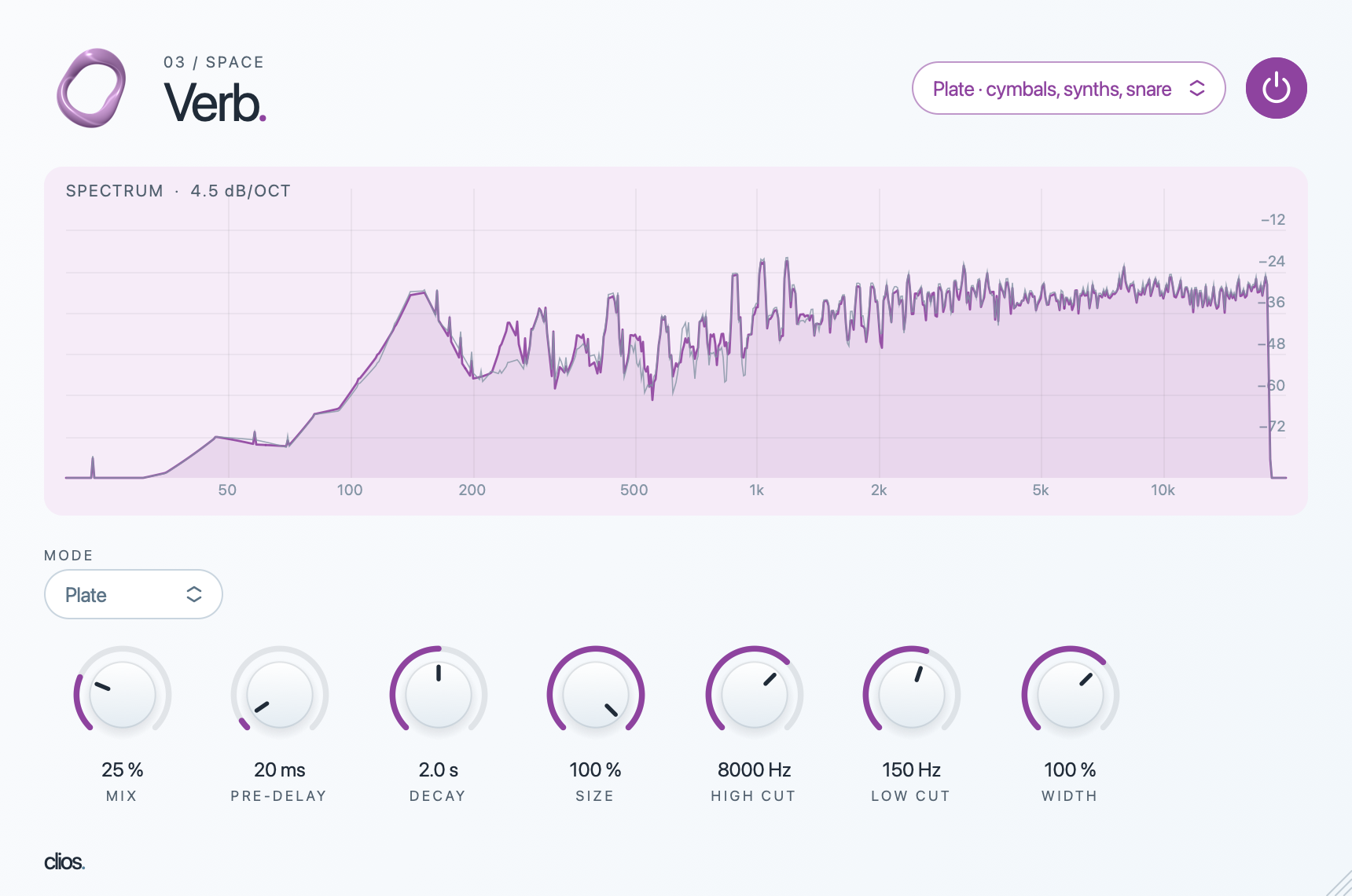
Reverb
Creates longer spaces with four reverb modes: Concert Hall, Plate, Room and Chamber. Pre-delay, decay, size, high/low cuts, width and Mix shape the tail.
What it adds One interface covers several room characters while keeping the wet signal filtered separately from the source.
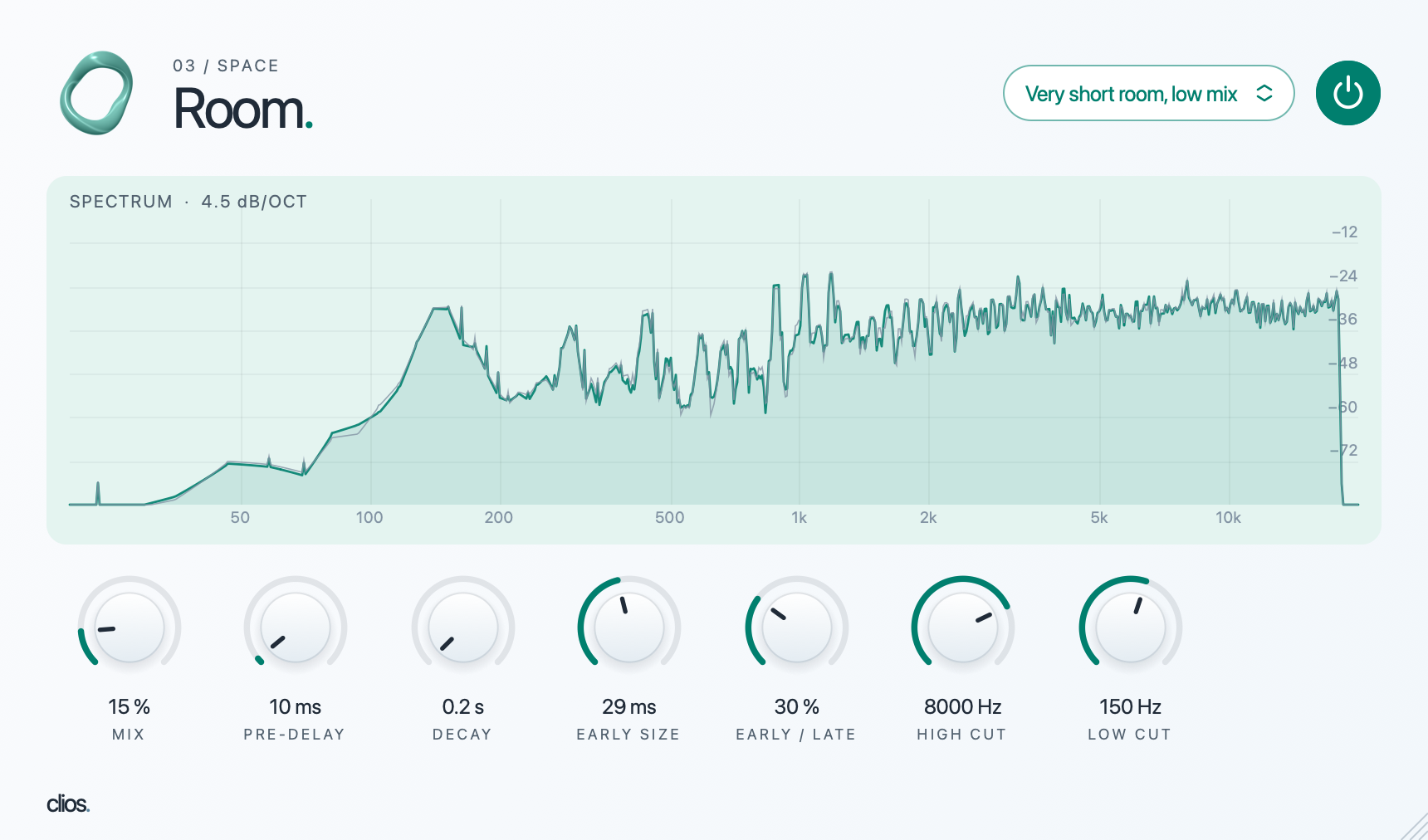
Room reverb
Creates a compact acoustic space around a source. Pre-delay, decay, early-reflection size and Early/Late balance set its depth.
What it adds Useful for subtle cohesion when a long reverb tail would be too obvious; low and high cuts keep the room out of the way.
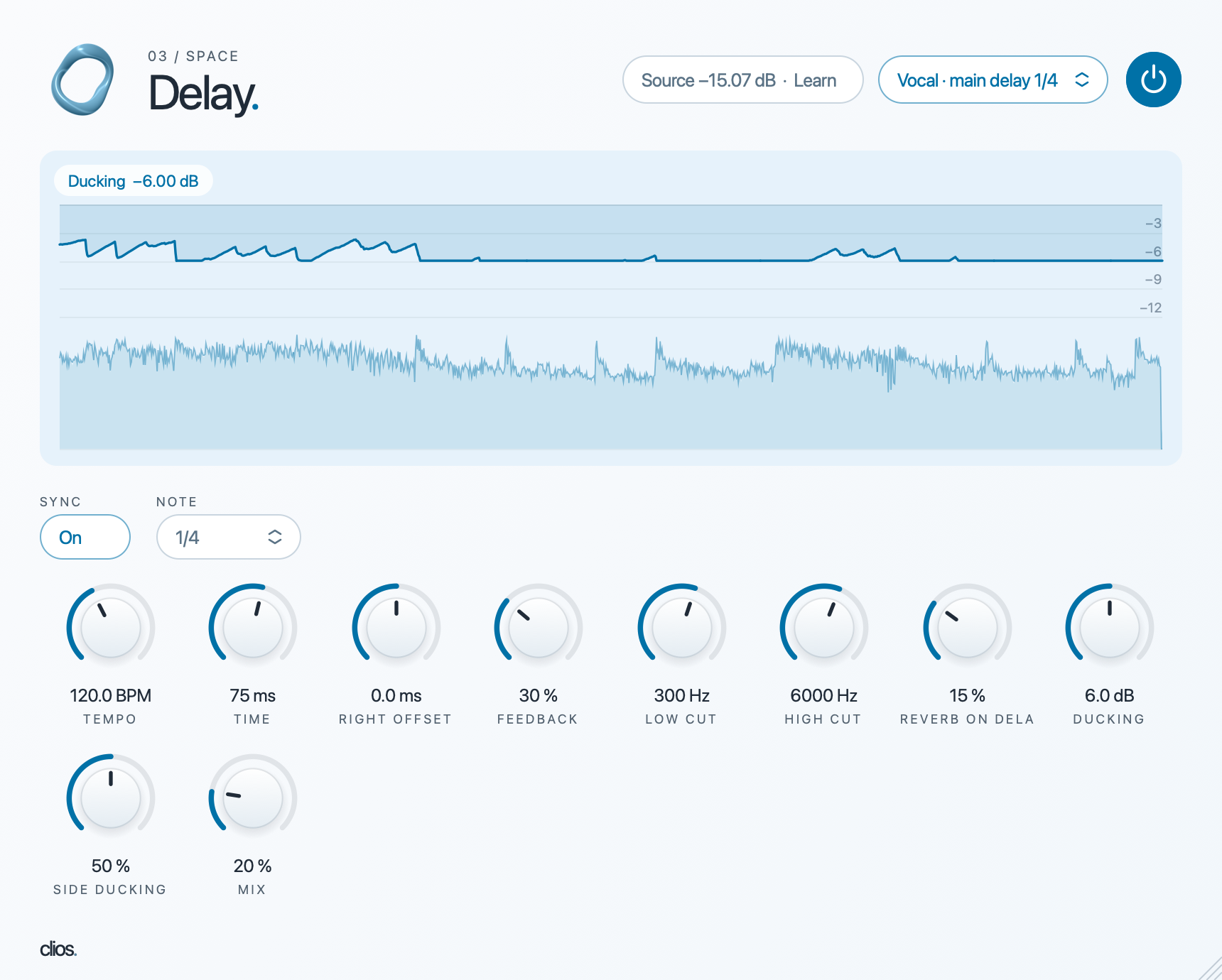
Stereo delay
Sets repeats by tempo division or milliseconds, with a right-channel offset and feedback. Filters, reverb on the echoes and ducking keep repeats behind the source.
What it adds Separate Side ducking can control echo width while the direct sound stays clear.
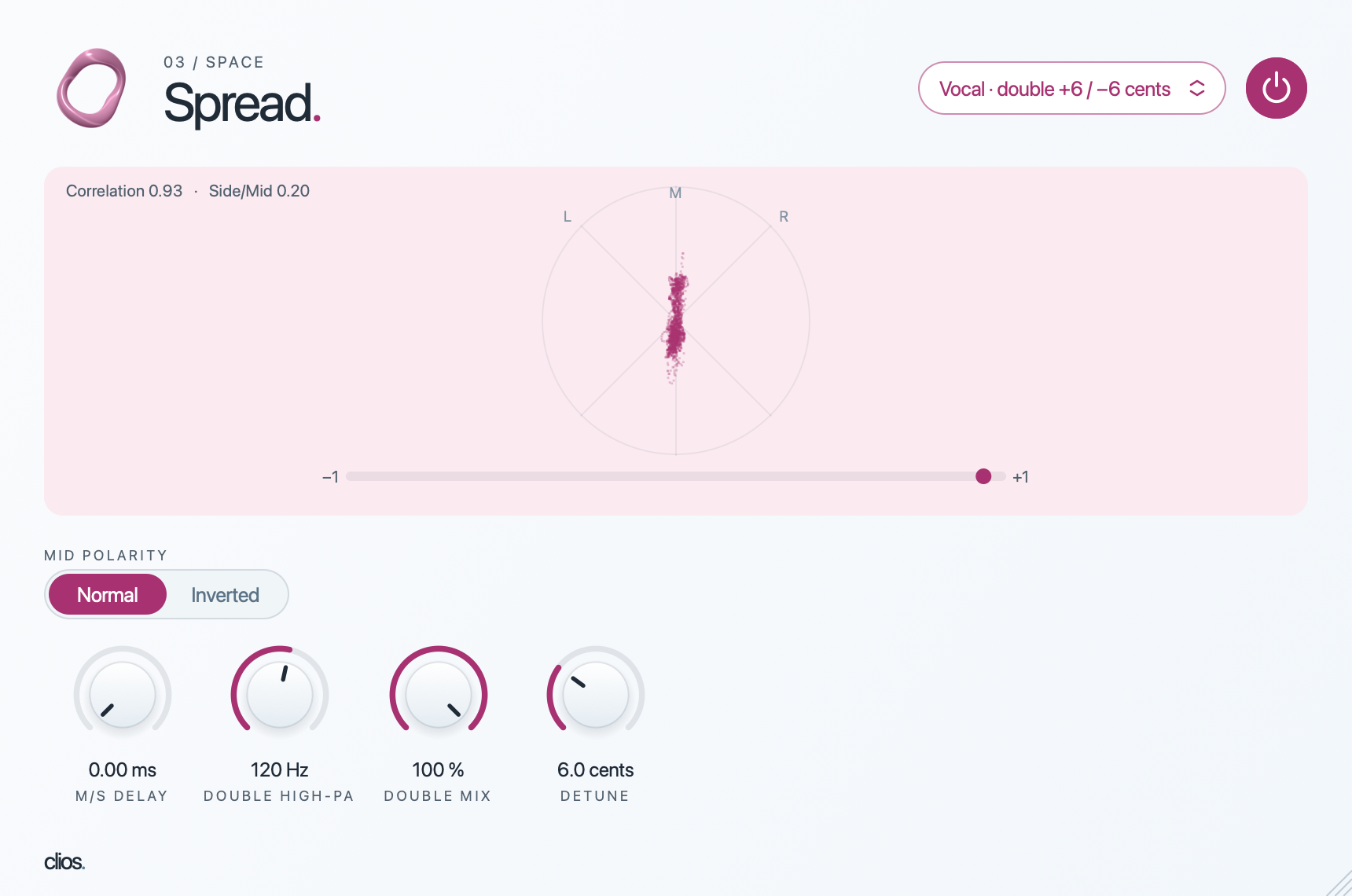
Stereo spread and doubler
Combines a small Mid/Side delay with optional detuned doubles. Mid polarity, a high-pass for doubles and Double Mix shape the width.
What it adds Gives a vocal or instrument a wider image while letting the un-doubled center remain present.
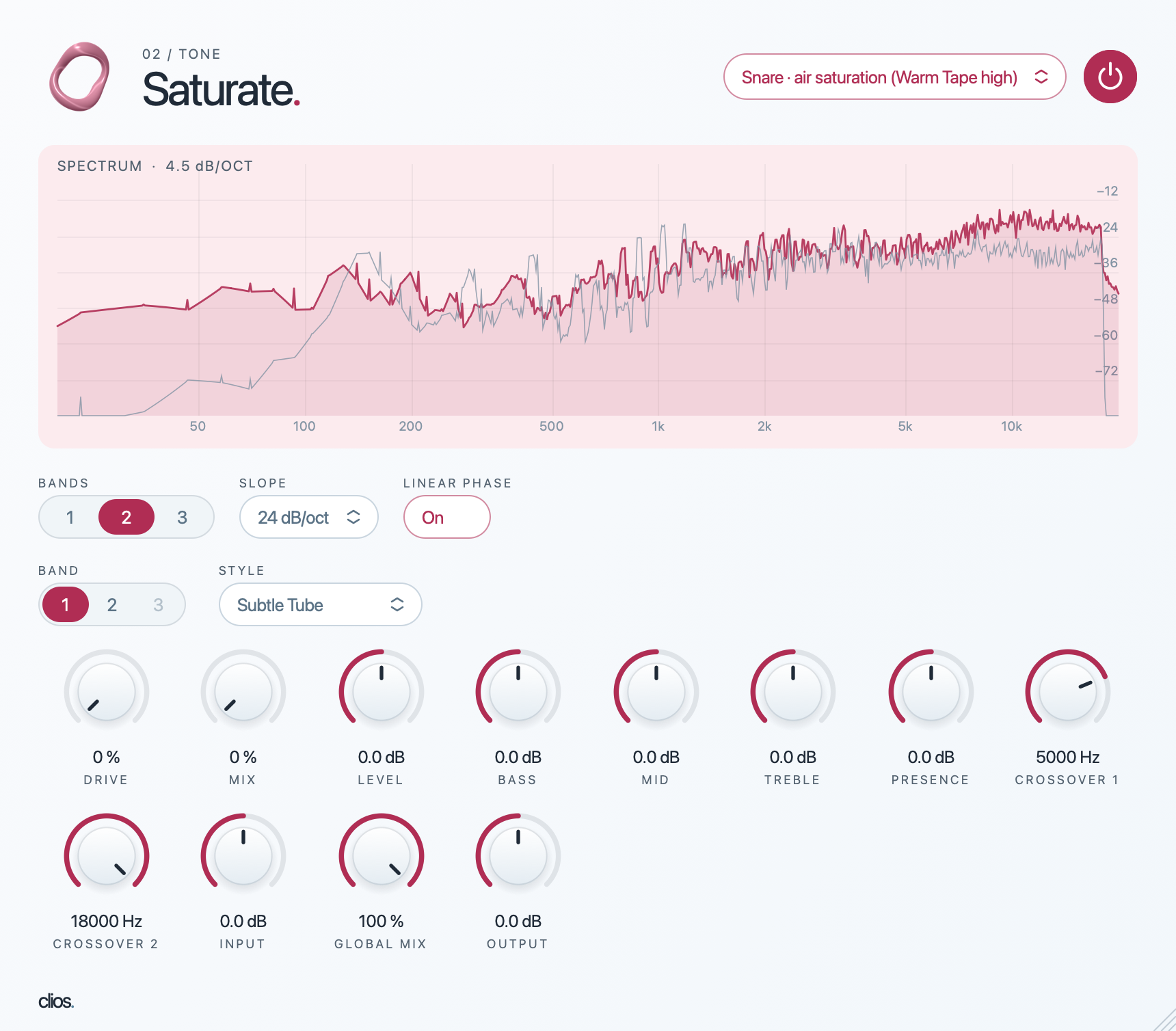
Multiband saturation
Divides the signal into bands and applies drive, style, tone and mix separately to each one. Crossover and phase controls set how the bands rejoin.
What it adds Can add grit to one region and leave another clean; harmonic and spectrum views reveal the resulting color.
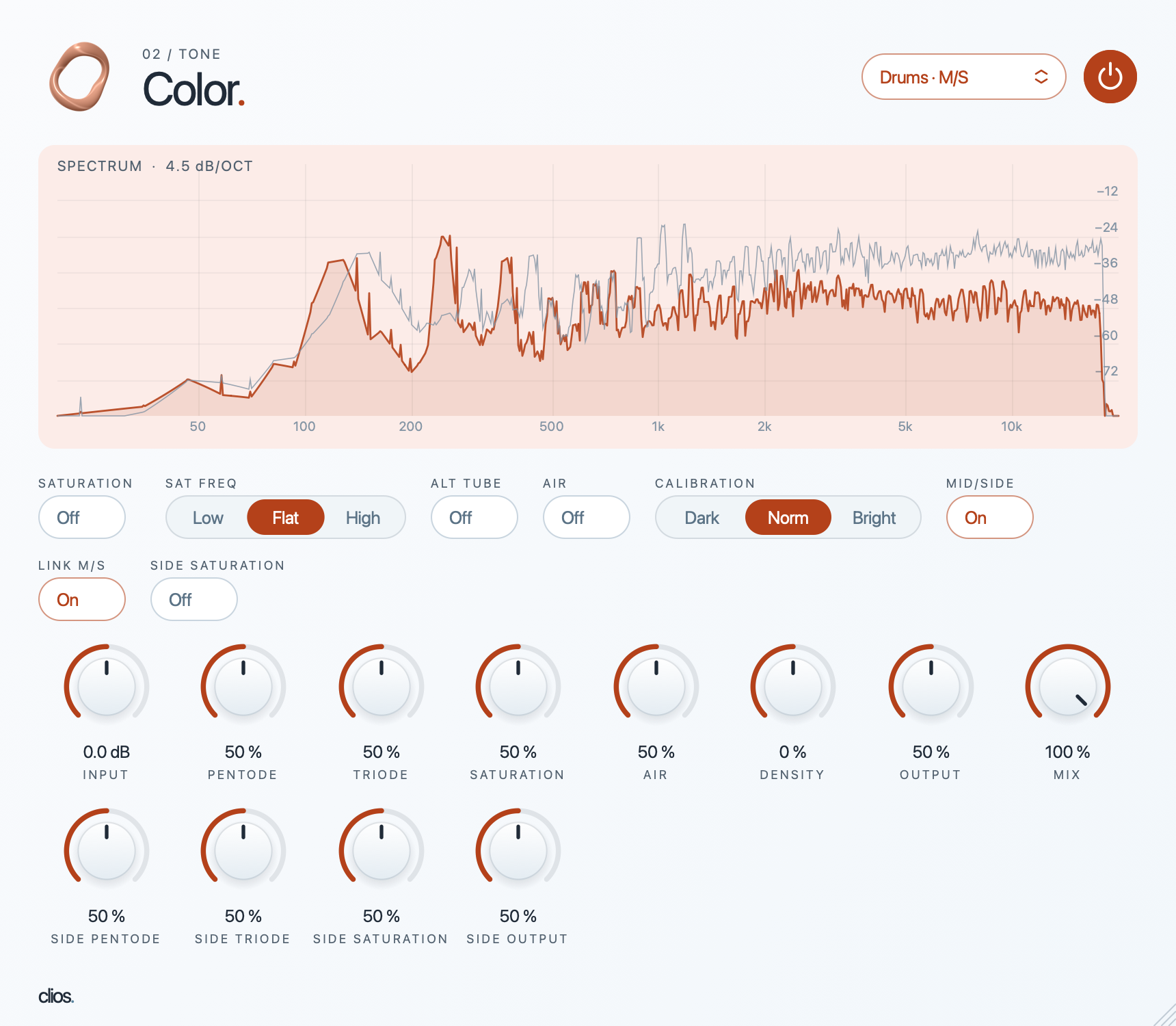
Tube color and saturation
Layers pentode and triode character with optional saturation and air. Input, calibration, density, output and mix set the overall drive.
What it adds Mid/Side operation and separate Side drive can color the edges of a group differently from its center.
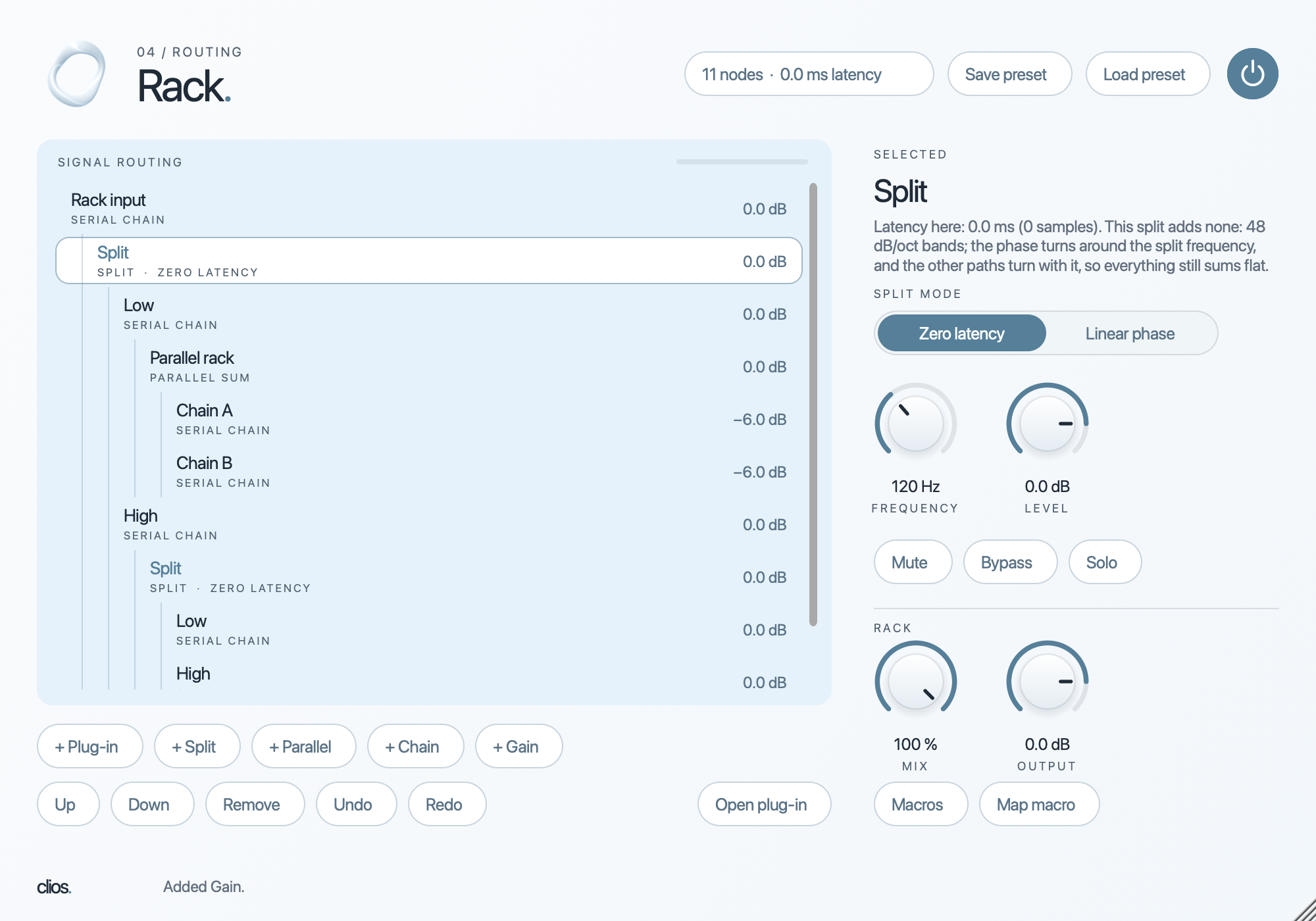
Nested signal router and plug-in host
Hosts AU or VST3 effects inside serial chains, parallel branches and frequency splits, including splits nested inside other branches. Each branch can hold its own effects.
What it adds Each split offers zero-latency IIR or linear-phase processing. The rack aligns branch latency and phase at the sum, and adds mix, solo, bypass, macros and presets. DAW plug-in only.