Latency when it matters.
Many processors offer an Exact mode and a lower-latency monitoring mode. The lower-latency path can change phase or timing, so the mode is a sound choice as well as a workflow choice.
CLIOS AUDIO / PRODUCT PREVIEW
Tools for shaping sound.
Space for finding your own.
23 PROCESSORS + CLIOS RACK.
Dynamics, tone, space & routing.
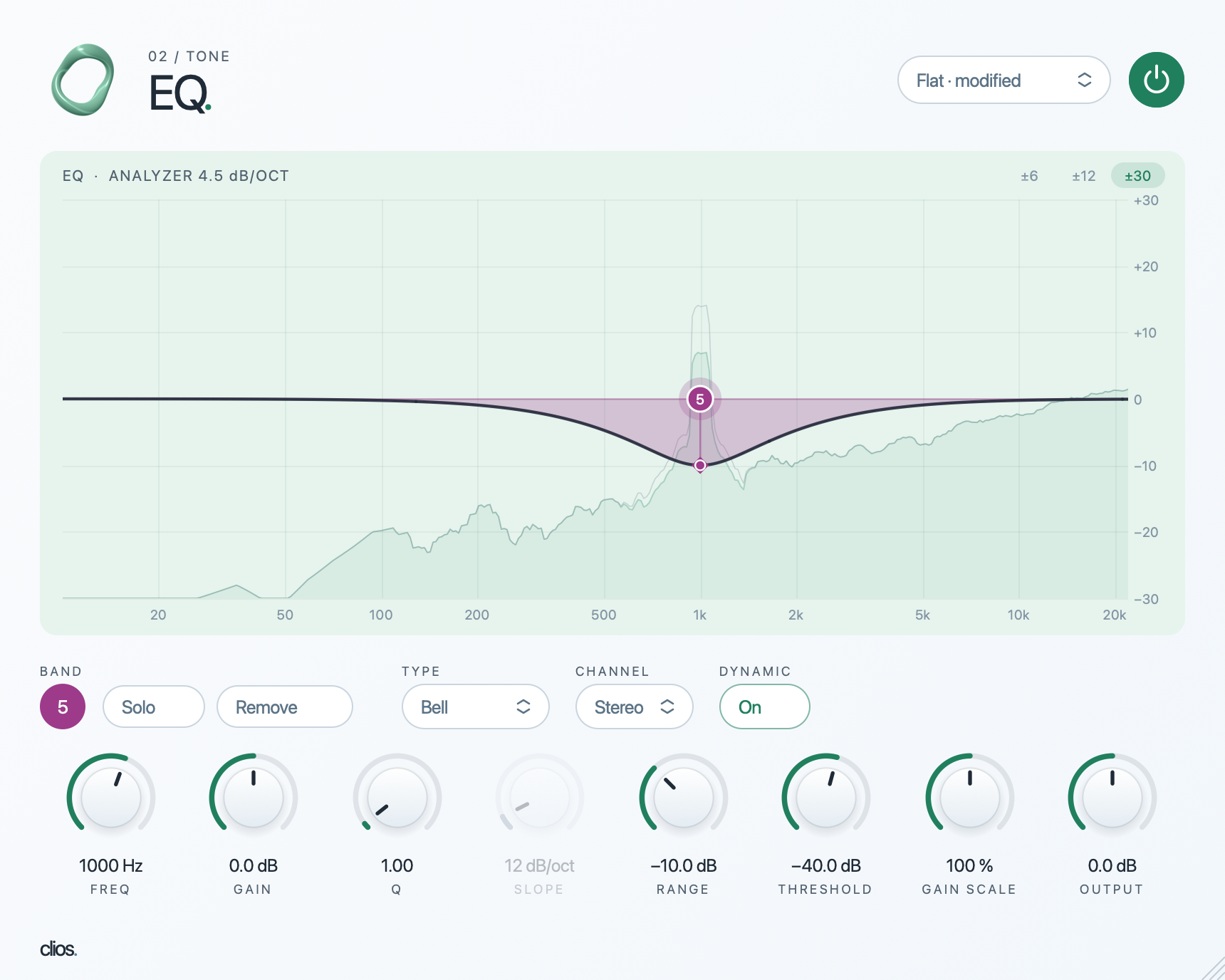
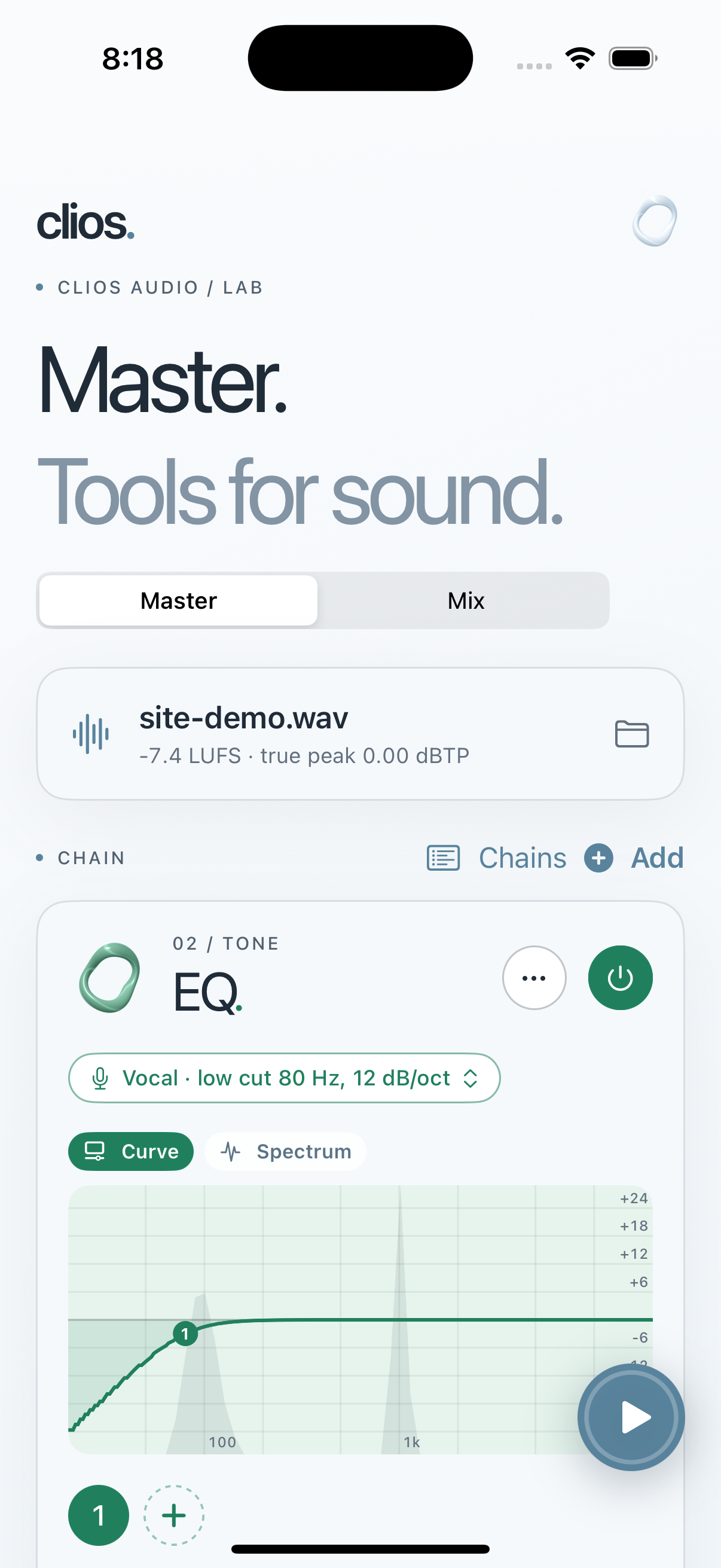
THE CURRENT EQ PLUG-IN. THE APP IN USE.

MEET MASTERING LAB
Mastering Lab brings the 23 Clios processors to iPhone and Mac. Import one mixed track for mastering, or multiple stems for mixing with a rack on each track and another on the master. Compare original and processed audio, inspect loudness and true peak, then export a WAV.
The app and plug-ins are in development. Captures come from working builds.
See the app and its workflow →Many processors offer an Exact mode and a lower-latency monitoring mode. The lower-latency path can change phase or timing, so the mode is a sound choice as well as a workflow choice.
The desktop processors and Mastering Lab share their audio engines. The app brings those tools into Master and Mix workflows with A/B listening and export.
Clios Rack hosts other AU and VST3 effects inside serial, parallel and nested split paths. Its frequency splits can favor zero added latency or linear phase.
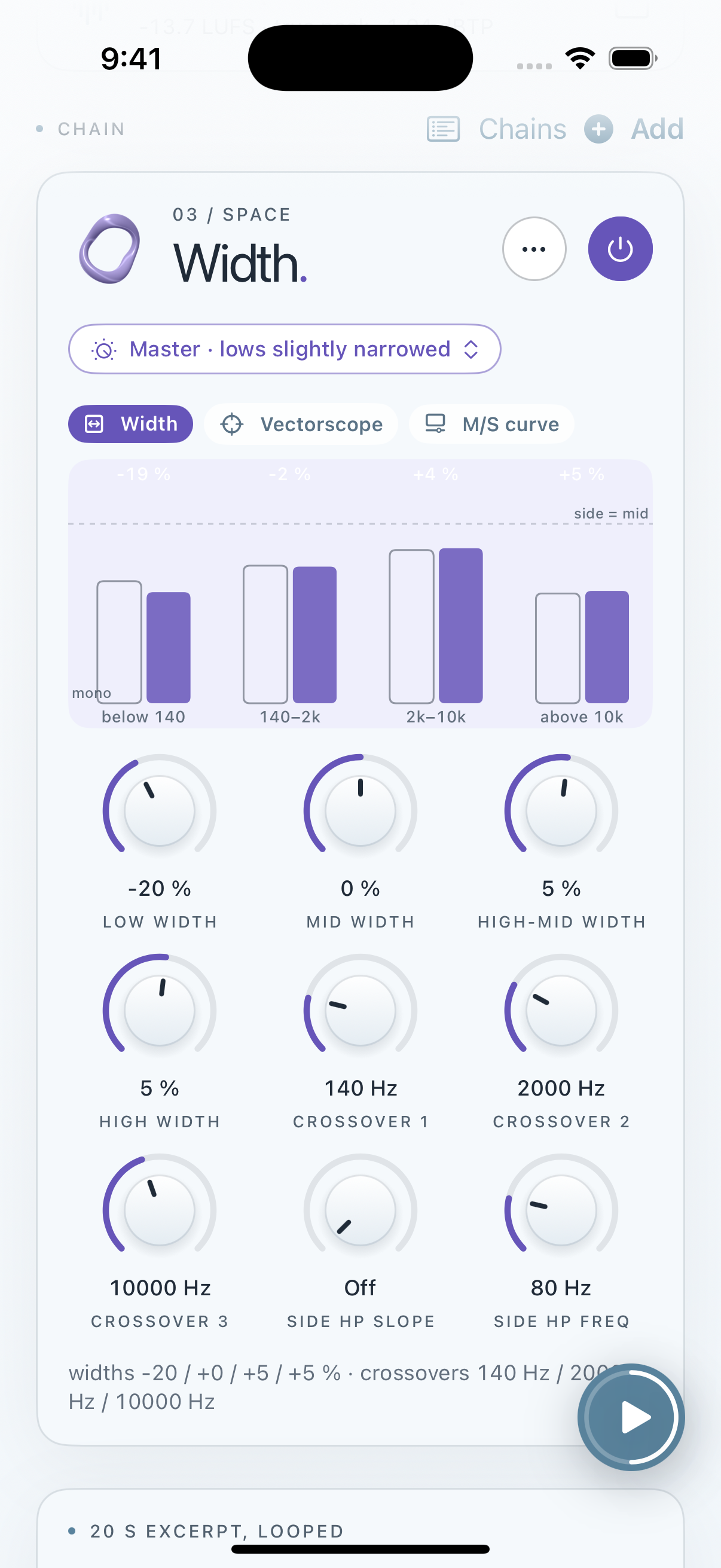
Multiband stereo width
Sets stereo width independently across four frequency regions. Three crossovers define the regions, while a Side high-pass can keep the deepest bass centered.
What it adds The width display and vectorscope help check what happens to the stereo field as each band changes.
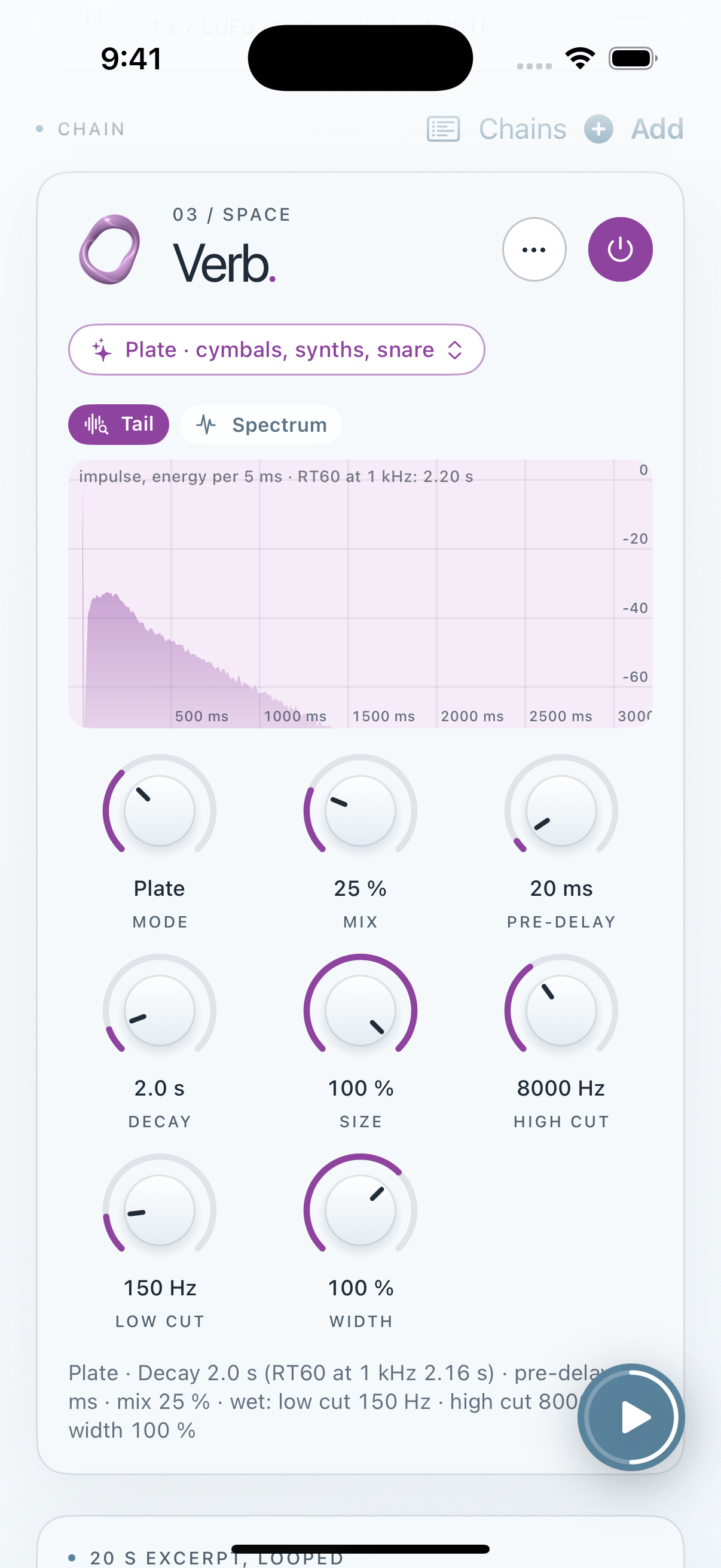
Reverb
Creates longer spaces with four reverb modes: Concert Hall, Plate, Room and Chamber. Pre-delay, decay, size, high/low cuts, width and Mix shape the tail.
What it adds One interface covers several room characters while keeping the wet signal filtered separately from the source.
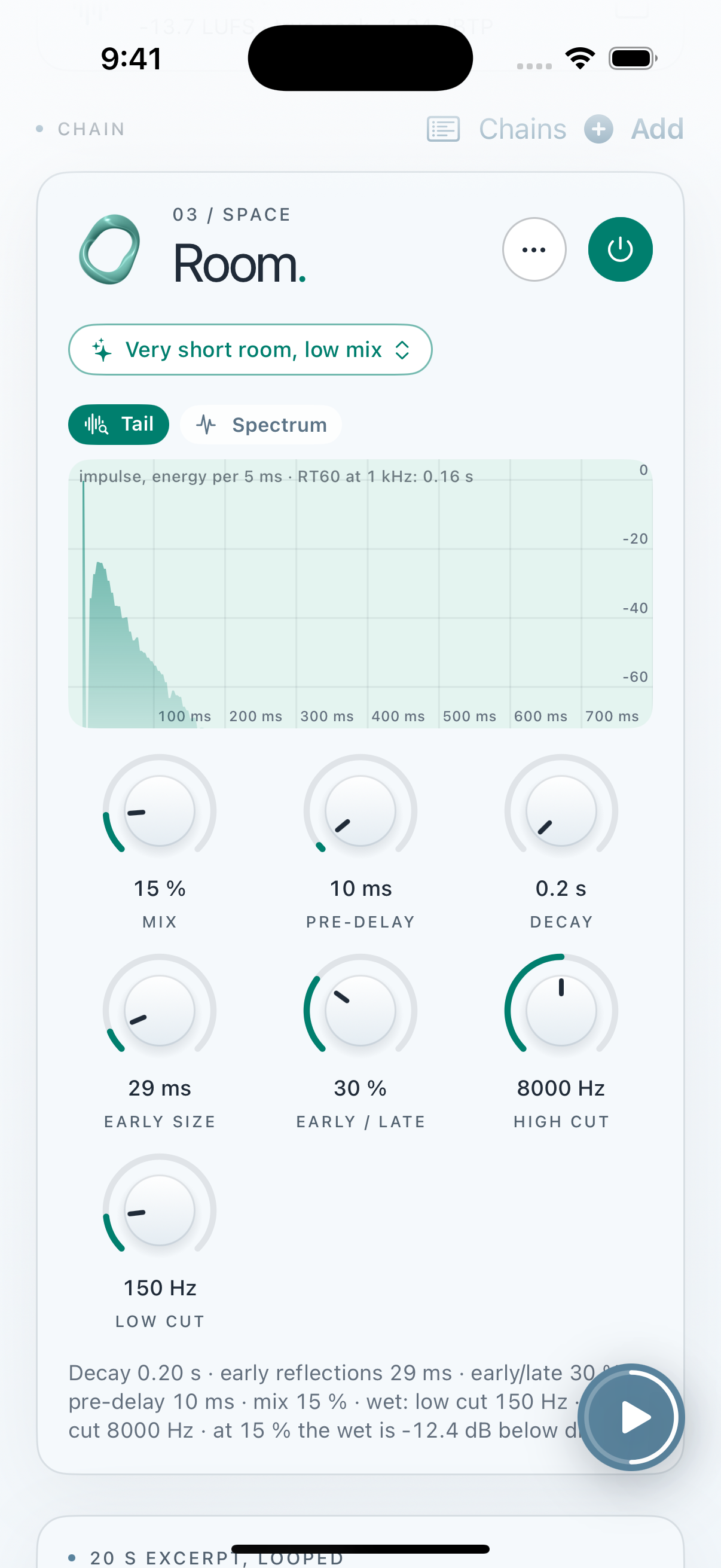
Room reverb
Creates a compact acoustic space around a source. Pre-delay, decay, early-reflection size and Early/Late balance set its depth.
What it adds Useful for subtle cohesion when a long reverb tail would be too obvious; low and high cuts keep the room out of the way.
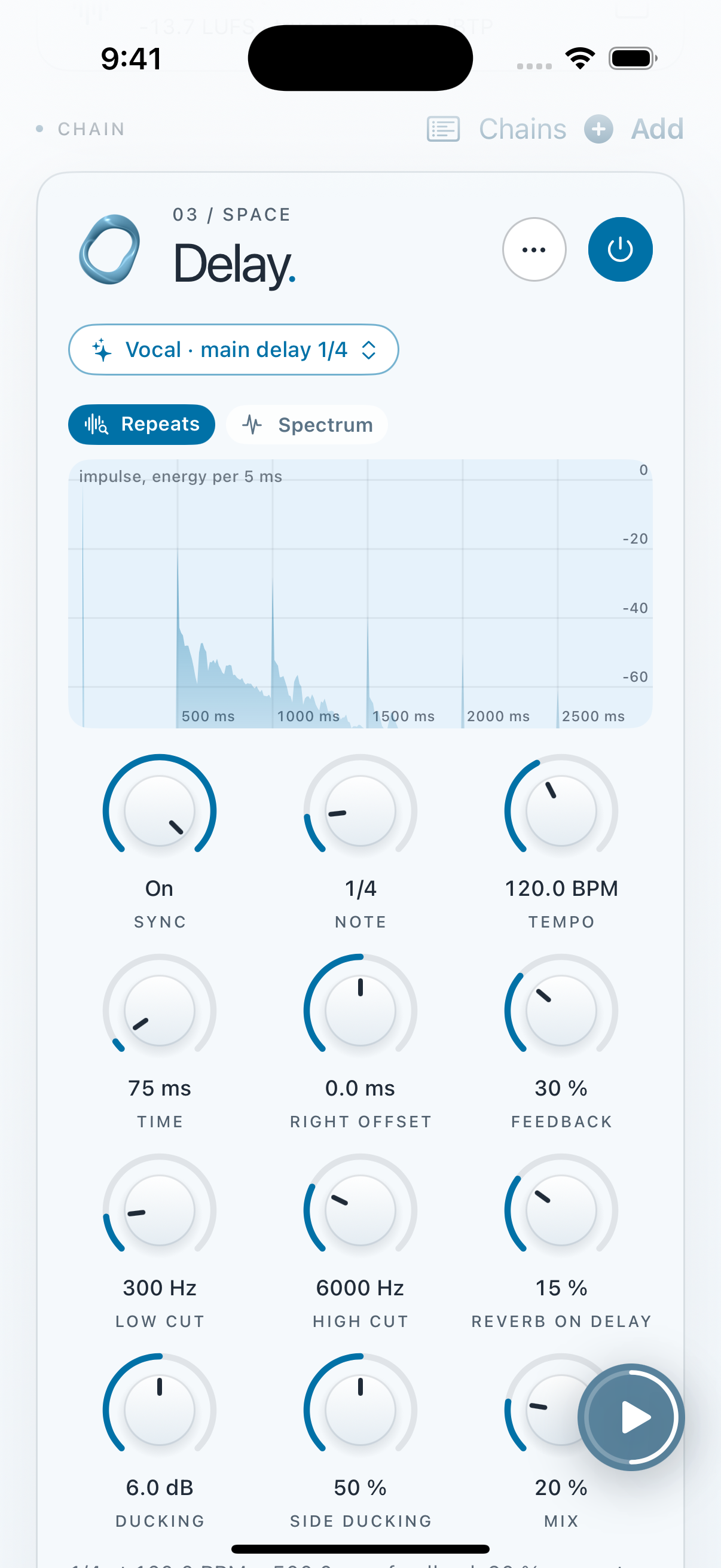
Stereo delay
Sets repeats by tempo division or milliseconds, with a right-channel offset and feedback. Filters, reverb on the echoes and ducking keep repeats behind the source.
What it adds Separate Side ducking can control echo width while the direct sound stays clear.
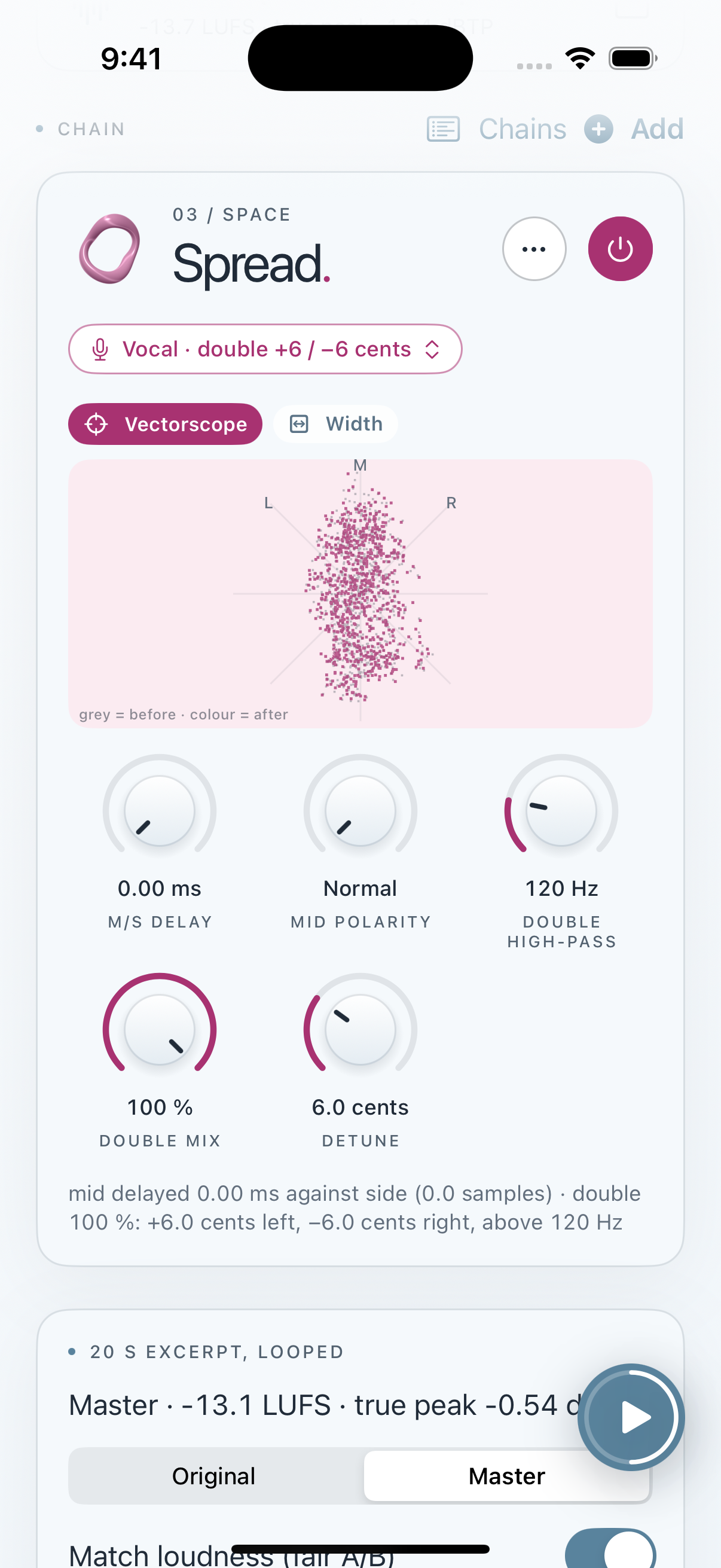
Stereo spread and doubler
Combines a small Mid/Side delay with optional detuned doubles. Mid polarity, a high-pass for doubles and Double Mix shape the width.
What it adds Gives a vocal or instrument a wider image while letting the un-doubled center remain present.